How do I weatherproof the Clarity Node-S AC power adapter when used outdoors instead of the Solar Panel?
If you're powering your Node-S with the AC adapter outdoors instead of the solar panel, the power connection needs weatherproofing. This article covers how to protect a single Node, multiple Nodes, and why a drip loop matters.
Before you start
- Always follow applicable electrical codes and safety rules. Outdoor mains power and water are a dangerous combination, water reaching the connection can cause short circuits or a fire hazard, so weatherproofing isn't optional.
- Ideally, connect your AC adapter directly to an IP-rated outlet enclosure. If that's not possible, for example the Node is far from the outlet or you're powering several Nodes, use a waterproof protective enclosure as described below.
Connecting a single Node
Use a waterproof protective enclosure that provides a sealed opening for the AC cord on one side and the extension cord on the other. These are typically low-cost and available from many retailers.
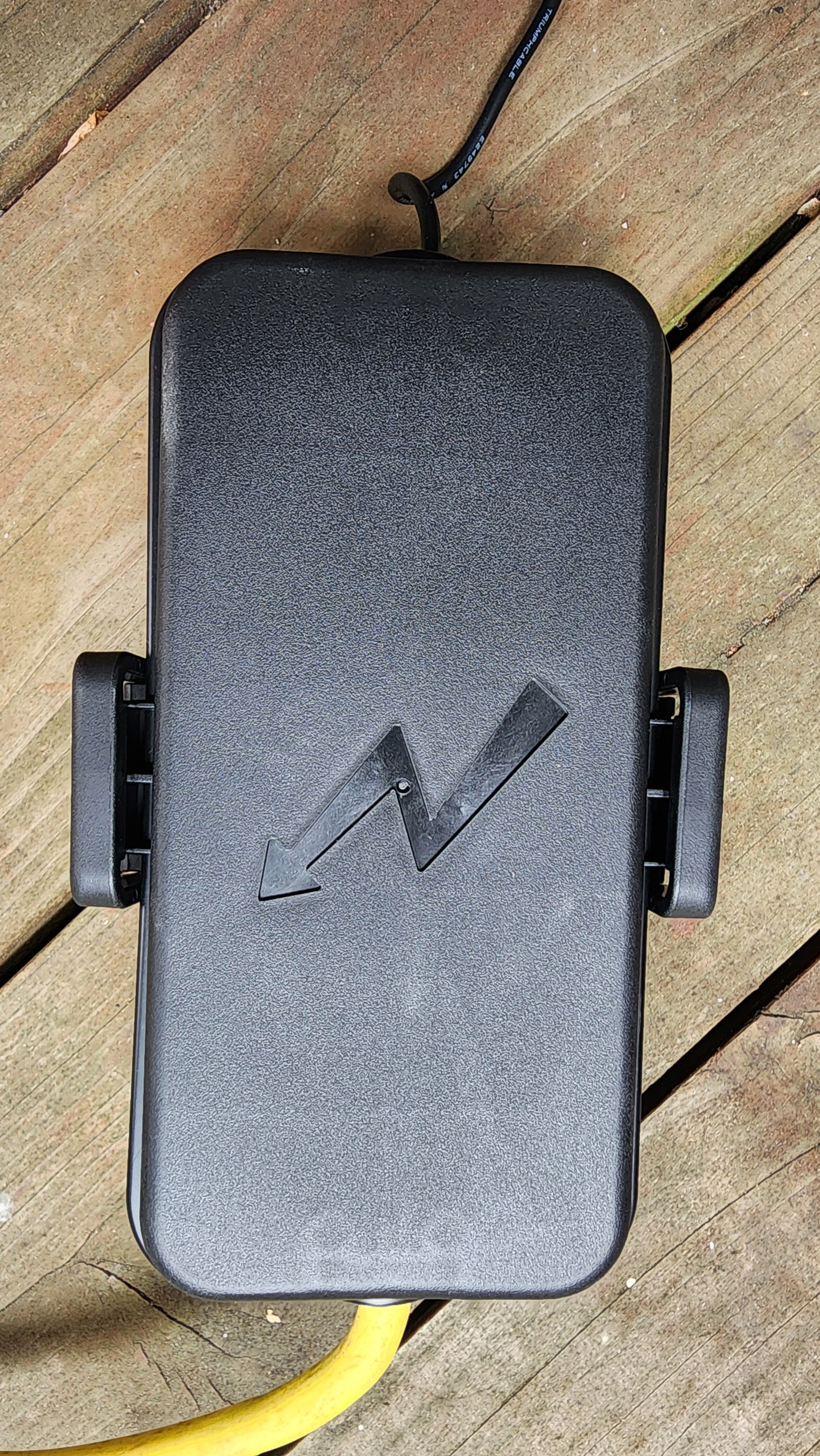
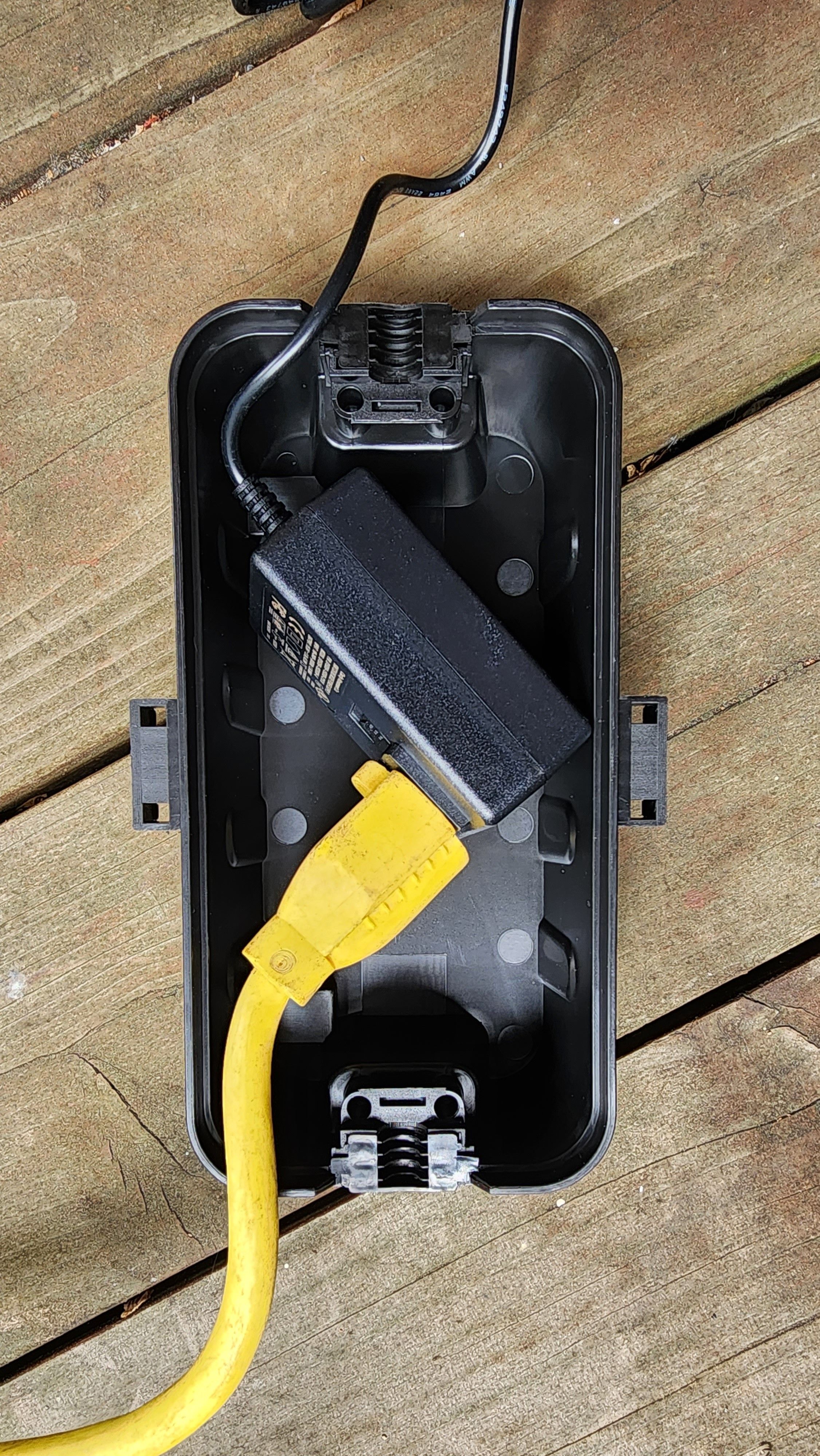
Recommended specifications:
- Minimum IP54 rating. In especially rainy or stormy environments, IP55 or higher is preferable.
- Wall mountable. Mounting it to a wall keeps the enclosure secure and prevents accidental movement that could unplug the device.
- Approx. 9"L × 4"W × 4"D. The enclosure shown is 8" × 3.5" × 2.5" and the adapter just fits, extra space makes feeding the cords through easier.
Connecting multiple Nodes
For multiple Nodes, use a larger enclosure that fits an entire power strip.
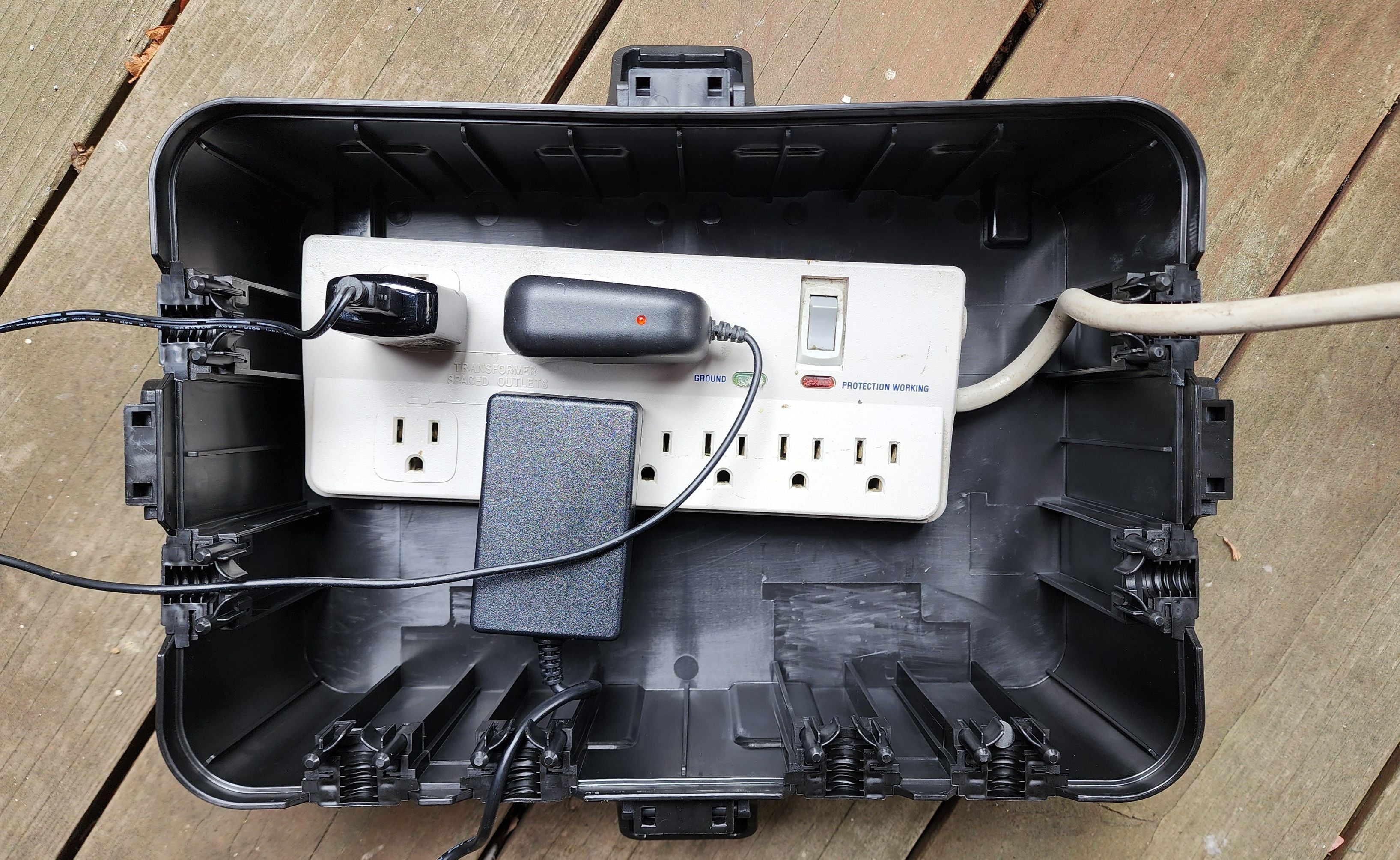
Recommended specifications:
- Minimum IP54 rating, with IP55 or higher for very rainy or stormy environments.
- Wall mountable, to keep it secure and prevent accidental unplugging.
- Approx. 13"L × 9"W × 5"D. The enclosure shown is 12.5" × 8.5" × 5" and provides ample space for the power strip and multiple adapters.
Make a drip loop
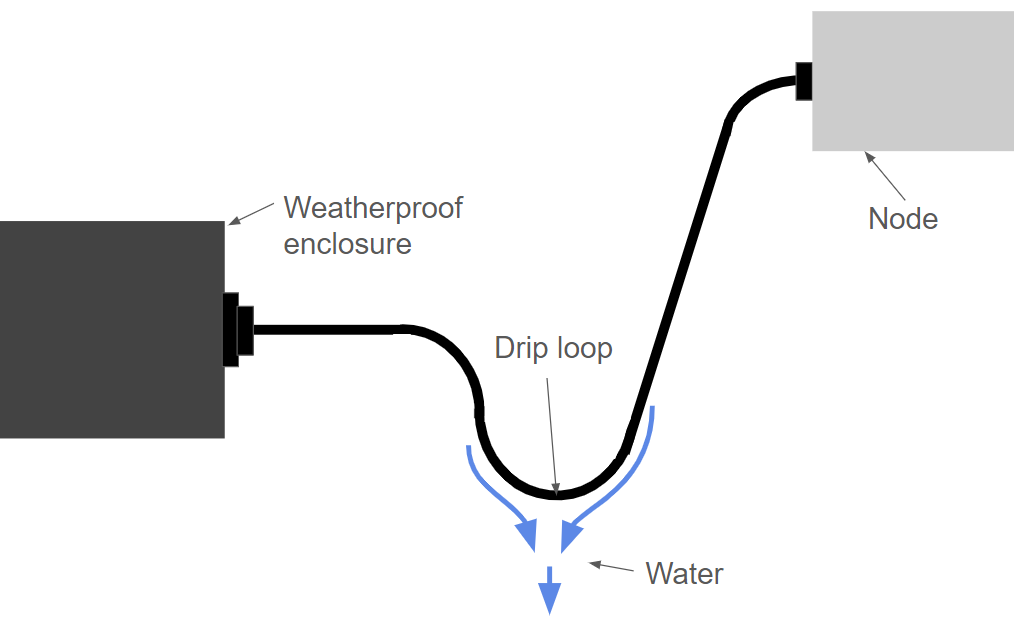
A drip loop keeps water from running along the cable into the equipment or outlet, which can cause short circuits or a fire hazard. Form a U-shaped loop in the cable below the point of connection, so water is directed to drip off at the lowest part of the loop instead of continuing toward the electrical components. It's a simple step that guards against water ingress, corrosion, and electrical failures.
What's next
- Deploy your Node-S.
- Deploy the External Power System for higher-power Modules.
Still need a hand? Email us at support@clarity.io or create a support ticket, and our team will get back to you.
Was this helpful?