Deploying your Clarity Wind Module
This guide walks you through pairing, assembling, connecting, and field-deploying the Clarity Wind Module with a Clarity Node-S.
- You must charge, assemble, and configure your Clarity Node-S before connecting the Wind Module. If you haven't configured the Node-S yet, follow the Node-S deployment guide first.
- Not all Node-S versions can pair with the Wind Module. For compatible device IDs, contact Clarity support at support@clarity.io. (Dashboard also checks compatibility for you during pairing — incompatible nodes are greyed out.)
- Align the module to true north (with local declination correction). Skipping the declination correction is the most common cause of wrong wind-direction data.
- When not in use, store the module in its original packaging. If you need to return a unit to Clarity, ship it in the original packaging to prevent damage.
In the box
| Item | Photo |
|---|---|
| 1 × Wind Module quick-installation manual (provided by ONWA) | |
| 1 × Wind Module | 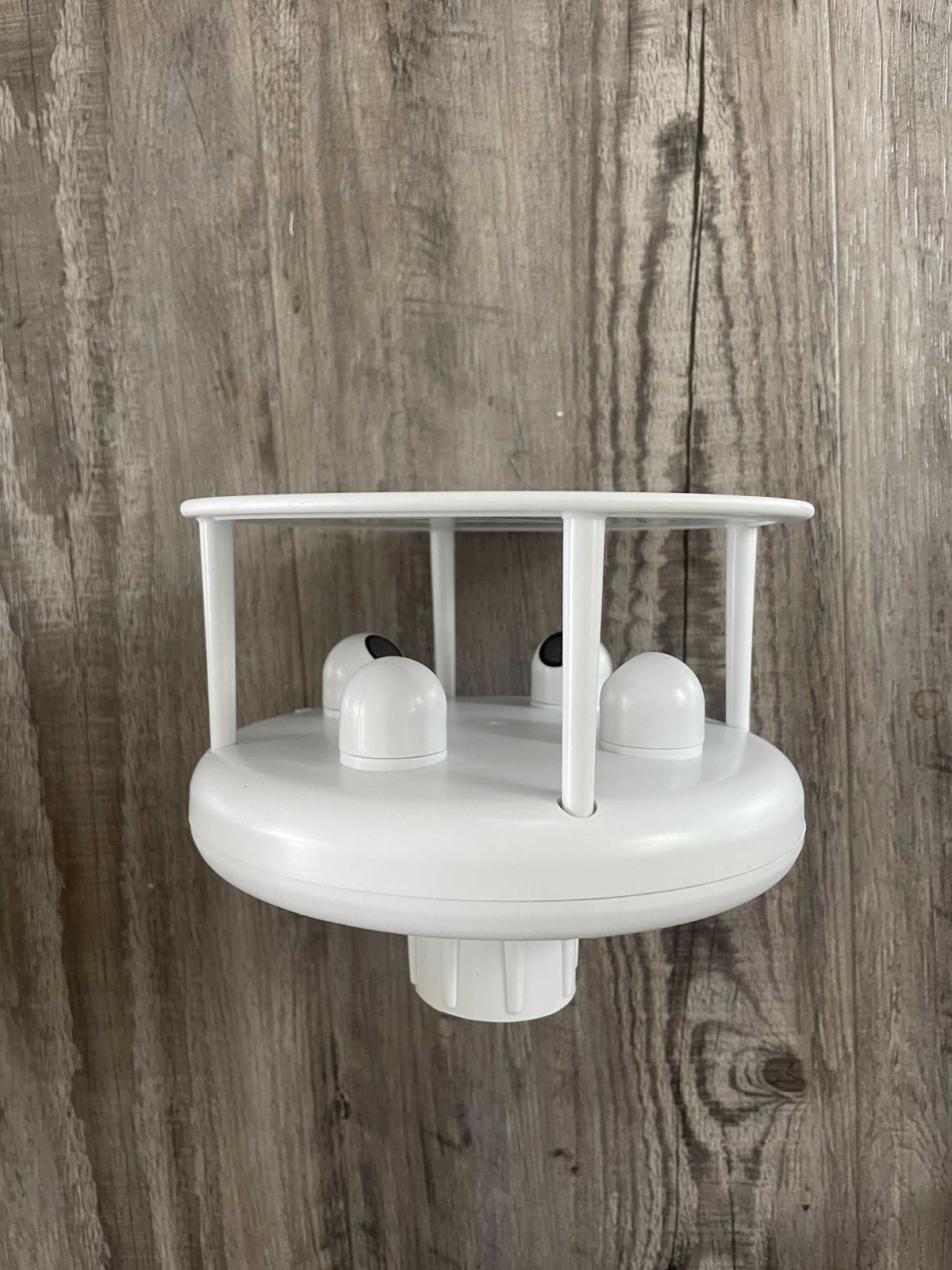 |
| 1 × accessory-module-to-node cable (1.5 m) | 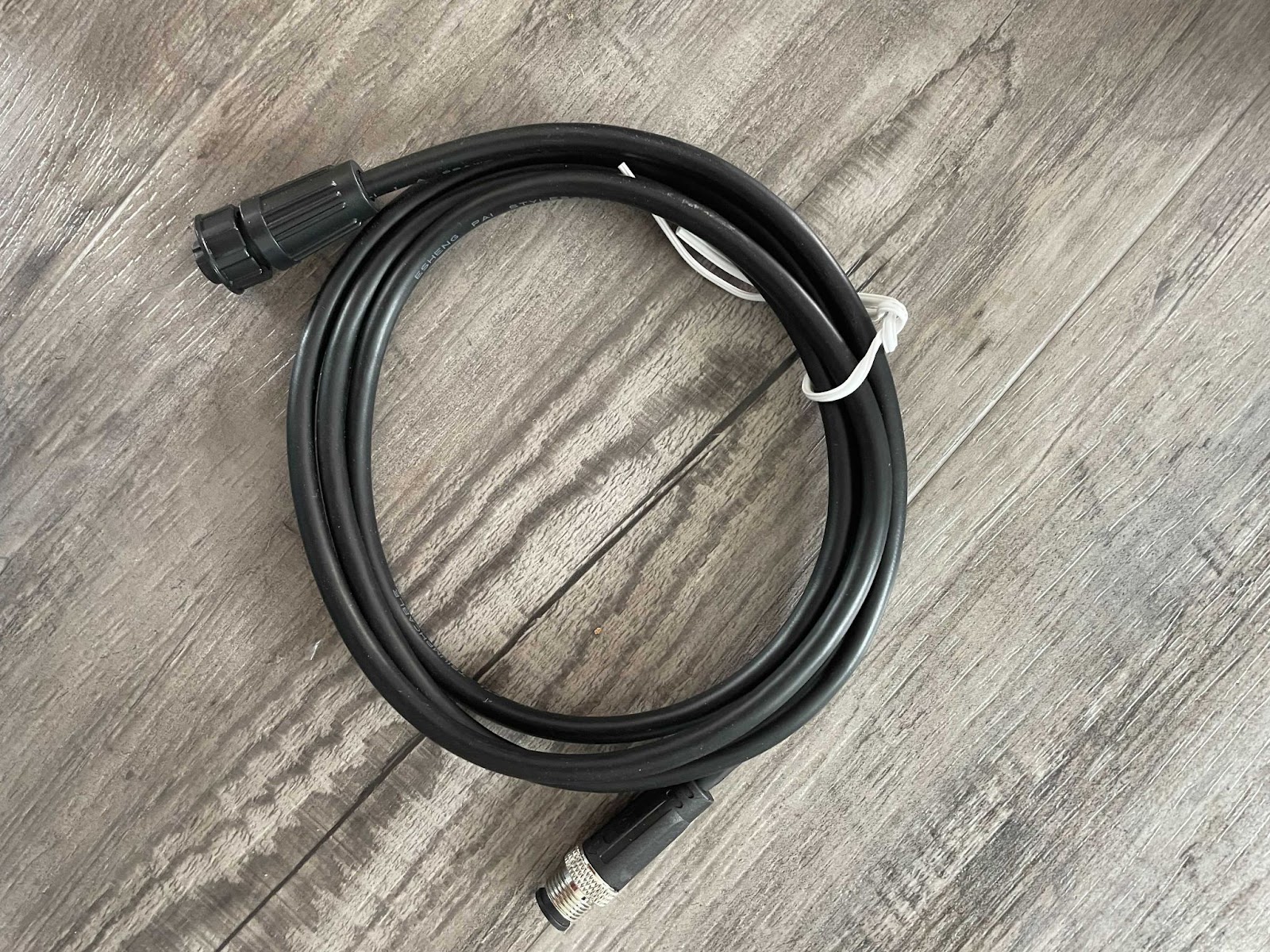 |
| 1 × mounting pole (40 mm outer diameter) | 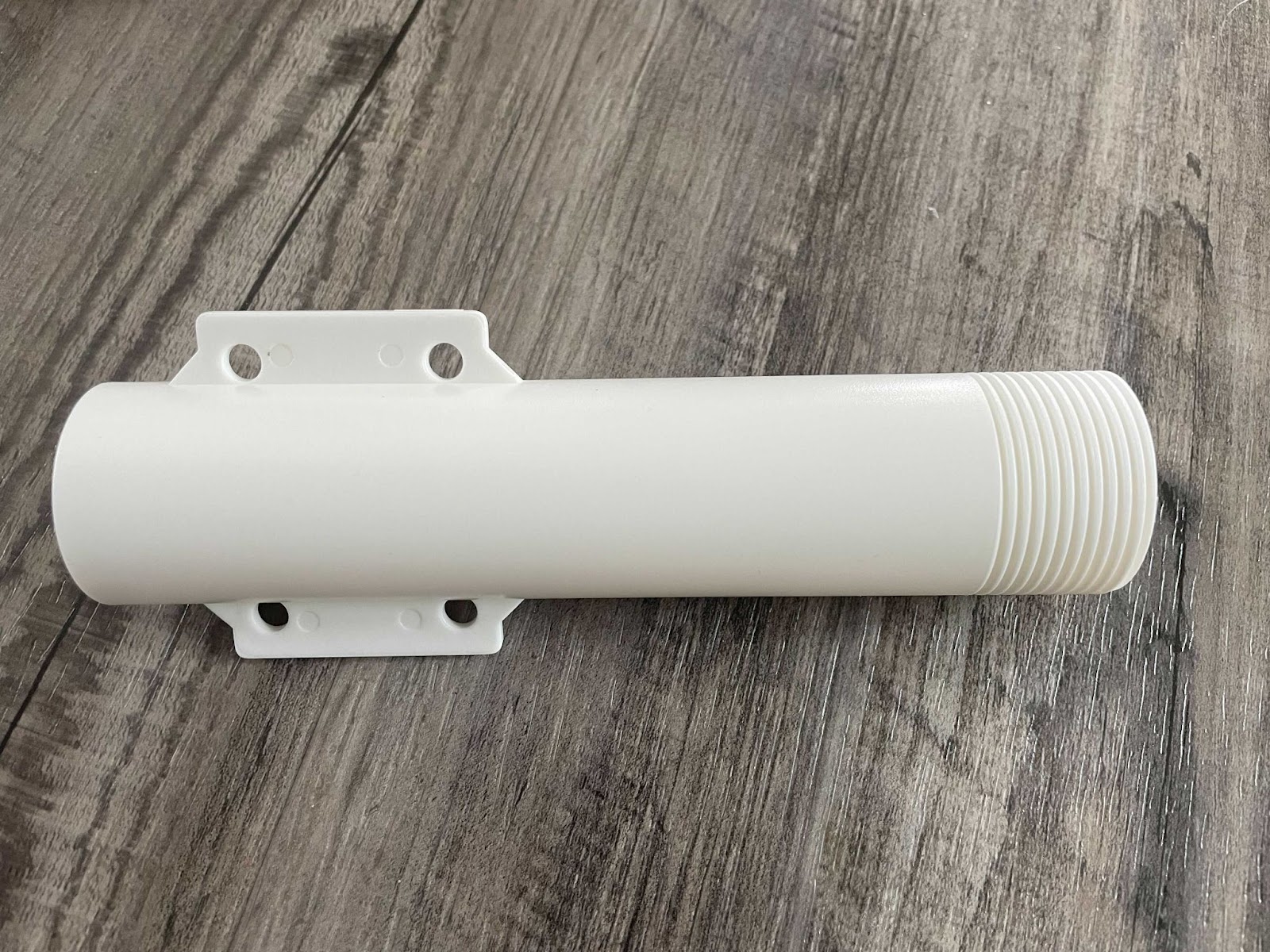 |
Standard accessories pack:
| 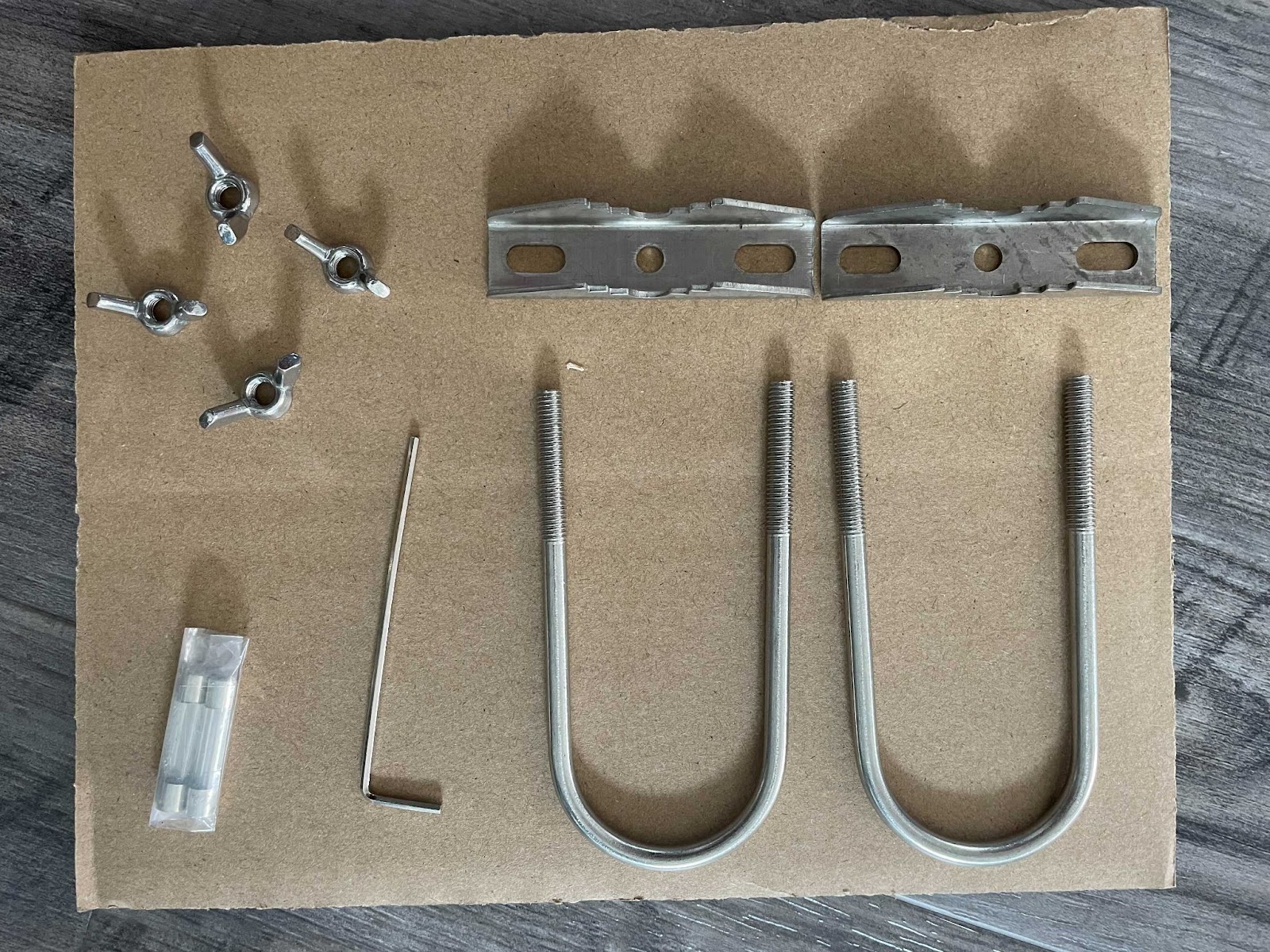 |
| Also needed but not included |
|---|
| A deployment pole (max 40 mm outer diameter) or a surface to attach the mounting pole to |
| Additional mounting equipment for your surface or pole diameter — the included mount fits poles up to 40 mm; an extension pole may be needed for adequate airflow |
| A precision compass to determine true north |
Pair the module in Dashboard
To use an accessory module it must be paired with a Node-S. Pairing tells the Clarity system the two are connected, so the module's data can flow to the Clarity cloud.
Pairing uses the guided Pair module wizard, which works the same way for every accessory module: open the Devices page, choose the module, pick a compatible node, and pair. For the full click-by-click walkthrough, follow Pair a module on Dashboard.
- Configure the Node-S first. It must be set up before you can pair a module — see the Node-S deployment guide. The wizard only offers nodes that are compatible and available, so an unconfigured or incompatible node won't be selectable.
- You need an org admin or technician role. Without one, the Pair module button is disabled ("Requires org admin or technician role") — ask your org admin.
- Moving a module from another node? See How to unpair your module first.
What to confirm for the Wind Module
When the wizard shows the deployment guide cards and the Confirm before you pair checklist, they cover requirements specific to the Wind Module:
- Align to true north — rotate the module so the triangle mark on the casting points to TRUE north (not magnetic north). Use NOAA's CrowdMag app for your local declination together with a precision compass. (Skipping the declination correction is the most common cause of wrong wind-direction data.)
- Lift it above obstructions — mount to a pole up to 40 mm outer diameter; use an extension pole so the sensor sits clear of buildings, trees, or other obstructions that would distort the airflow.
- Solar is enough — Wind runs on the standard Node-S solar panel; no EPS or mains adapter is needed. Just make sure the Node-S is fully charged before you head to the site.
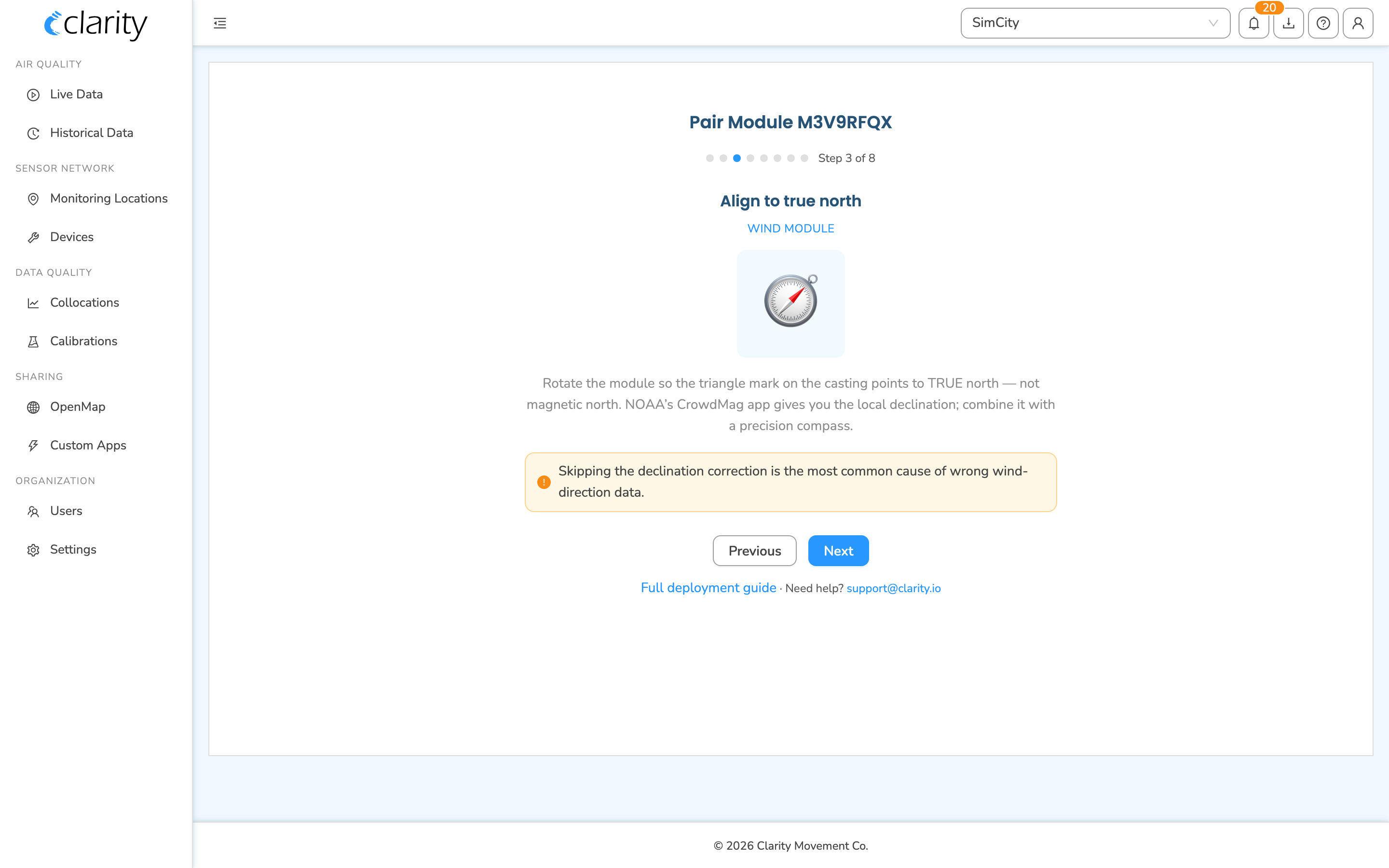
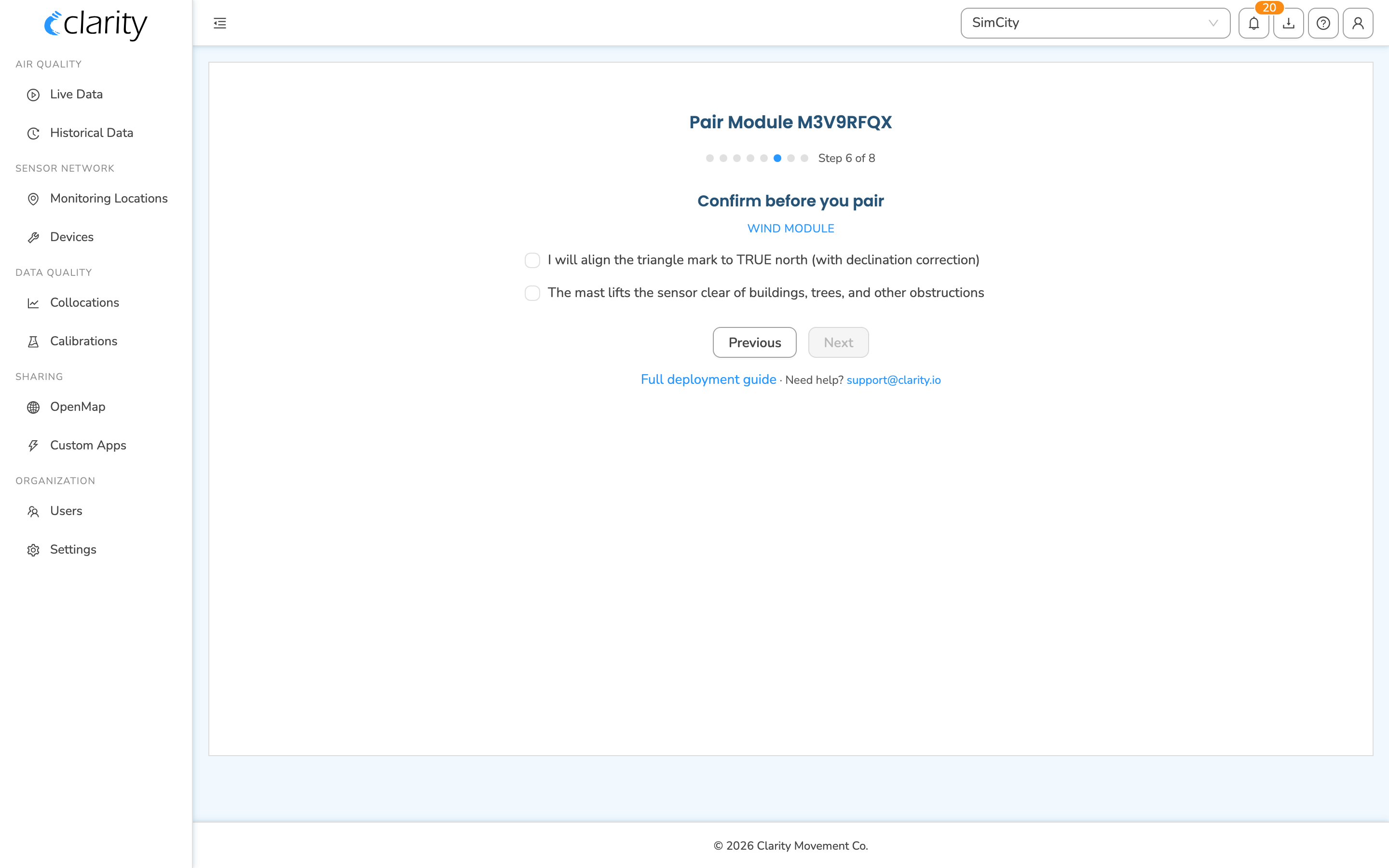
Every item on the Confirm before you pair checklist must be ticked before you can continue — that you'll align the triangle mark to TRUE north (with declination correction), and that the mast lifts the sensor clear of buildings, trees, and other obstructions.
What if it doesn't work?
- The module isn't in the wizard's "In inventory" group. Confirm you're in the right organization and have the Technician or Org Admin role. If it shows under Already paired, unpair it first.
- The node I want is greyed out. It's either incompatible or already has a module of the same family — for compatible device IDs, contact support@clarity.io.
- Still stuck? Email support@clarity.io with the node and module IDs.
What success looks like
The wizard showed the Module paired confirmation, and the Wind Module appears paired with your Node-S on the Devices page.
Check module status in Dashboard
After pairing, confirm the module is recognized and reporting. Open Devices (under SENSOR NETWORK) and stay on the Deployed devices tab.
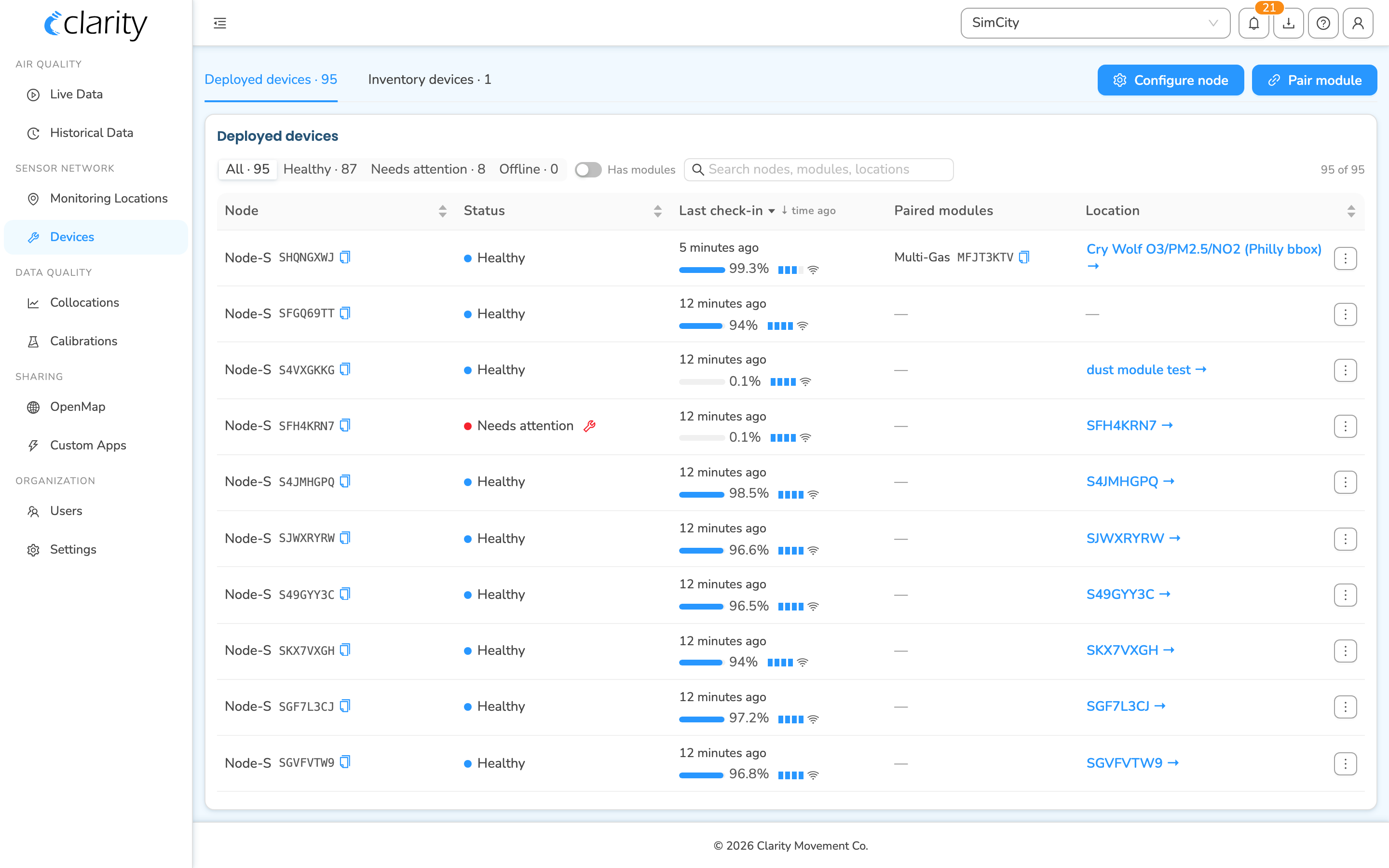
- The Paired modules column shows each node's paired module(s) by name and module ID.
- Flip the Has modules toggle to list only nodes that have an accessory module paired.
- Use the search box (top of the table) to find a node, module, or location by ID or name.
- The status pills (All / Healthy / Needs attention / Offline) filter the fleet; each row shows status, last check-in, battery, and signal. For a deeper look, open the row's ⋮ menu and choose Diagnostics.
Assemble the module
-
Make sure the Clarity Node-S is assembled and configured in Dashboard. If not, review the Node-S deployment guide.
-
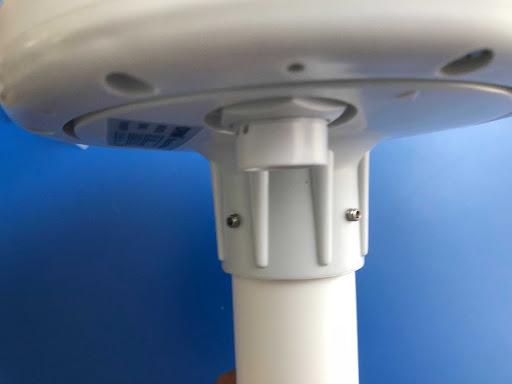
Attach the mounting pole to the Wind Module by screwing it into the module's base, then tighten the two set screws on either side with the provided hex screwdriver. Don't overtighten.
-
Plug the cable into the Wind Module and tighten it by hand using the knob.
What if it doesn't work?
- A part seems missing or won't fit. Check the In the box list at the top of this guide.
- Not sure about orientation. Follow the photos above; if still unsure, email support@clarity.io before mounting.
What success looks like
The Wind Module is fully assembled with all parts secured.
Connect the module to the Clarity Node-S
Run a connection test before deploying in the field, to confirm data is uploading to the Dashboard.
-
Make sure the solar panel cable is plugged into the configured Node-S body. When you plug it in, the Node-S plays the Node-S Power On sound and tries to connect to the Clarity Cloud.
-
Unscrew the cap covering the module port and plug the other end of the Wind Module cable into the Node-S body — align the cable pins and tighten the metal portion of the connector.
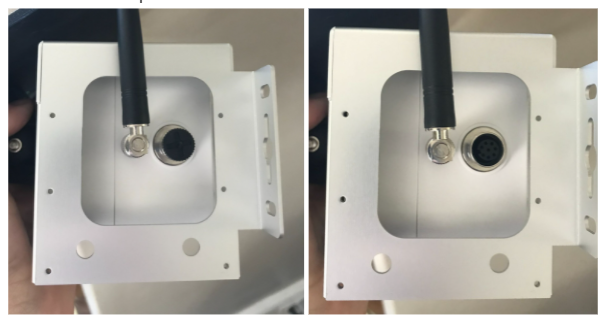
-
Once the module cable is connected, you'll hear the Node-S Power On sound again as the device resets.
-
Wait while the Node-S establishes a cellular connection. This can take 2–10 minutes depending on signal strength.
- If the node fails to connect, you'll hear the Node-S Connection Failure sound. Confirm the device is configured in Dashboard; if that doesn't help, contact support@clarity.io.
- If you hear the Node-S Low Battery sound, charge the device for at least 24 hours before proceeding.
- If the Node-S Connection Successful sound plays, continue to deployment.
-
After a successful connection, the device communicates with the module. You'll hear one of:
- Successful Module Connection sound — the module is working properly.
- Failed Module Connection sound — check the cable connection between the Node-S and the module.
- Module Configuration Error sound — the Node-S isn't configured to accept modules. Make sure the module and node are paired in Dashboard, then unplug and replug the Node-S solar panel cable. If that doesn't help, contact support@clarity.io.
What if it doesn't work?
- I hear the Connection Failure sound (beep beep beep). Confirm the module was paired on Dashboard first, then re-seat the cable firmly.
- The module shows an alarm on the Dashboard. See Troubleshooting accessory module alarms.
- Weak or no signal at the site. See Troubleshooting a weak signal alarm.
What success looks like
You heard the connection sounds, and the Wind Module reports as healthy on the Devices page (Status dot on your node's row).
Deploy the Node-S + Wind Module in the field
Site the Node-S + Wind Module properly so it provides valid wind data — see the Wind Module siting guide before you choose a location.
-
After choosing the site, mount the Clarity Node-S to the designated pole, wall, or panel.
- To make installation easier, you can temporarily detach the Wind Module cable from the node's module port.
- Use stainless-steel zip ties, hose clamps, or screws (not provided).
- Make sure the cable can reach the Wind Module once it's installed.
- More on Node-S deployment here.
-
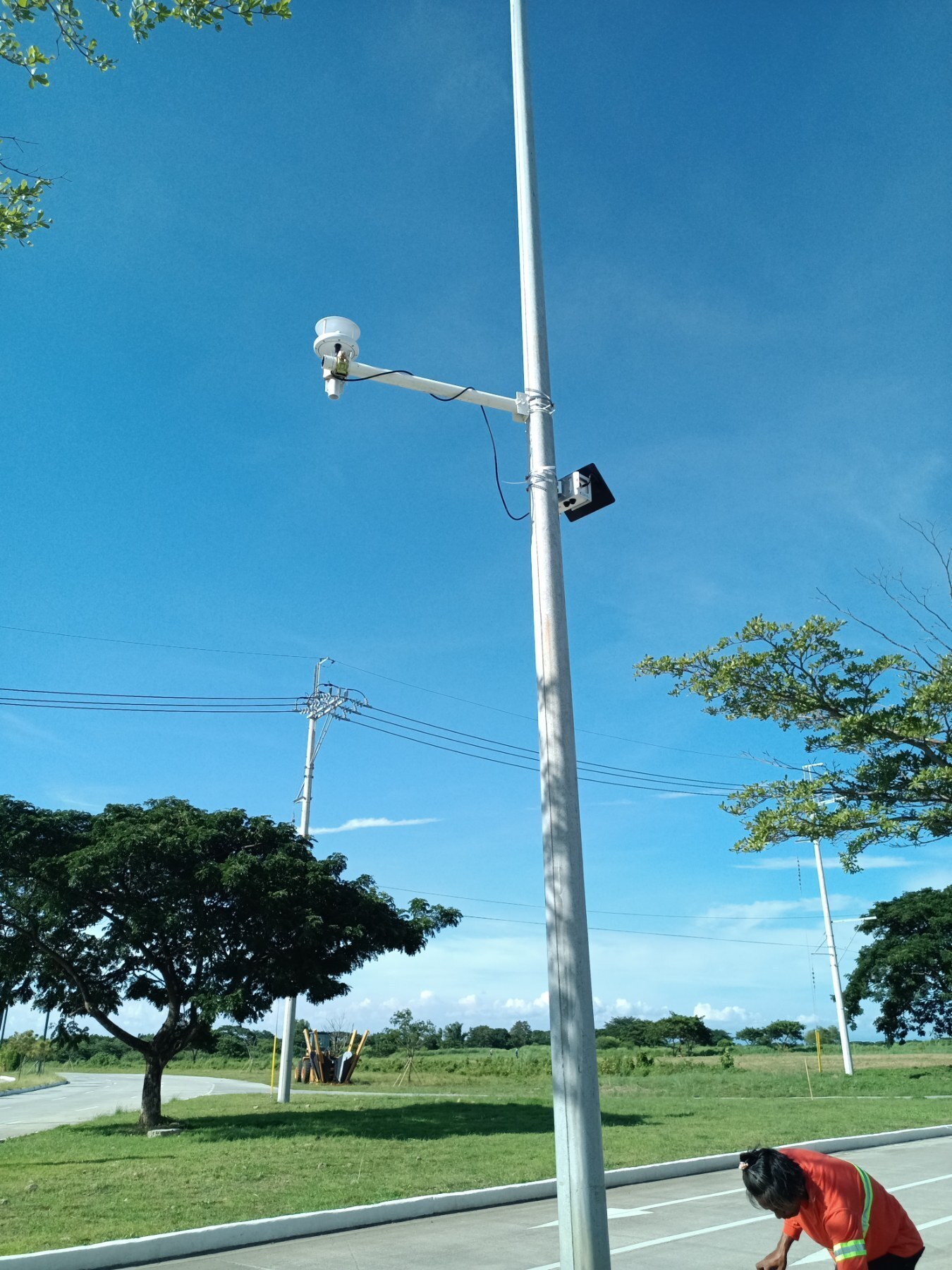
Mount the Wind Module to the designated pole or boom.
-
If using the provided accessories, align the deployment pole with the module's mounting pole, attach the two U-style screw bolts, and secure each with the provided butterfly screws.
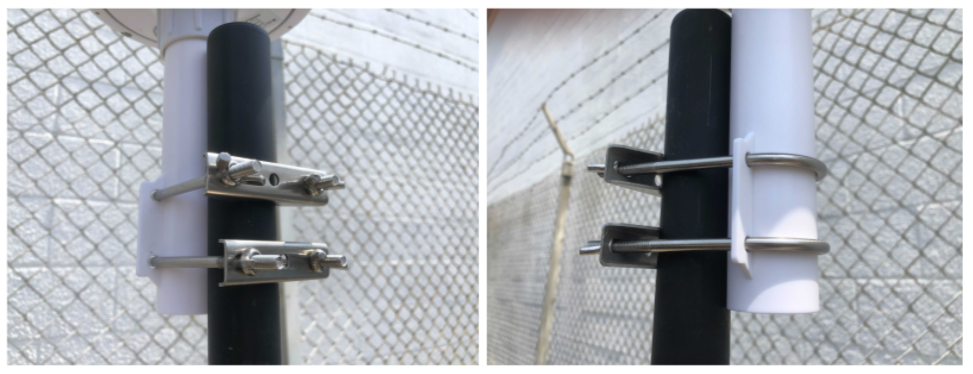
-
If you can't mount to the top of a pole, an extension pole or boom may be needed for unobstructed airflow.
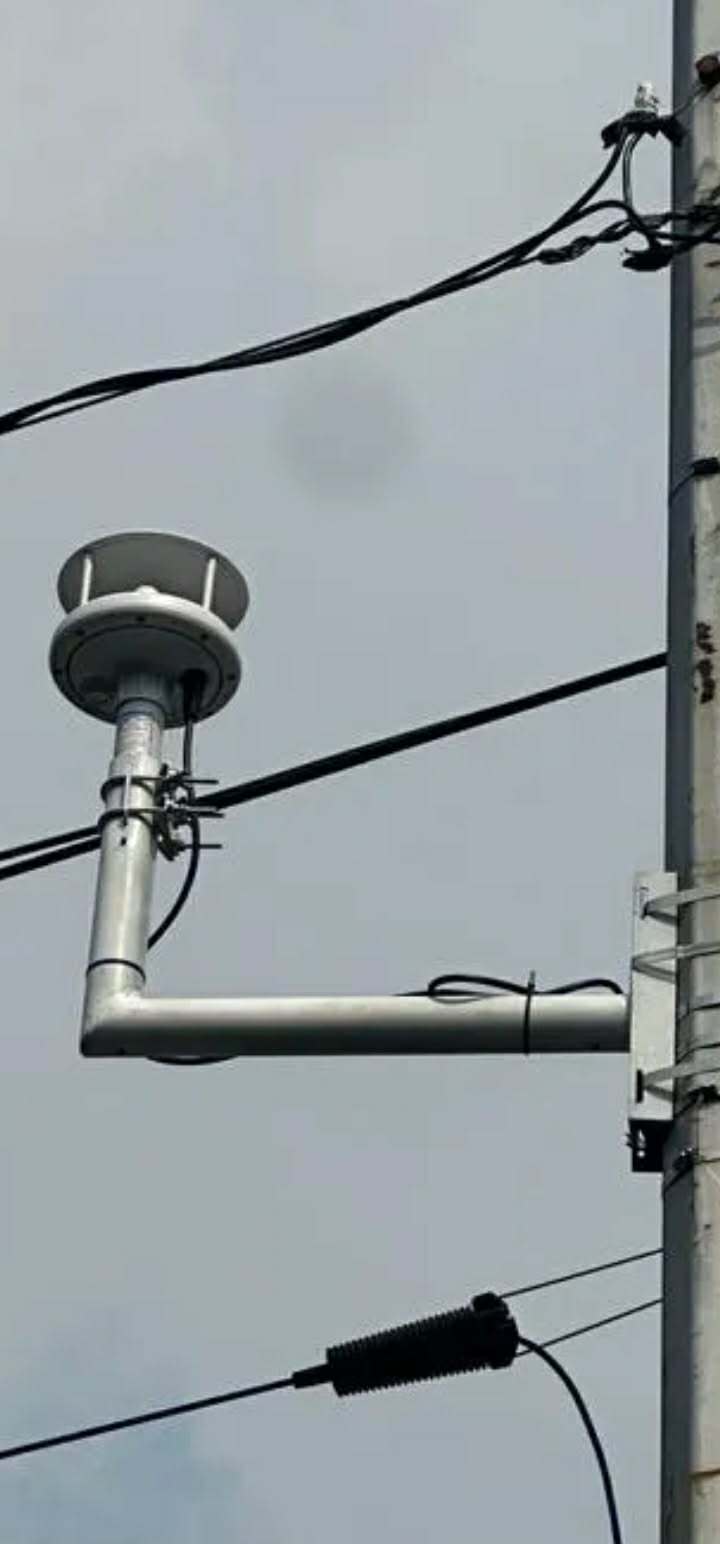
-
-
Align to true north. Rotate the Wind Module so the triangle mark on its casting points to TRUE north (the triangle is on the module's side).
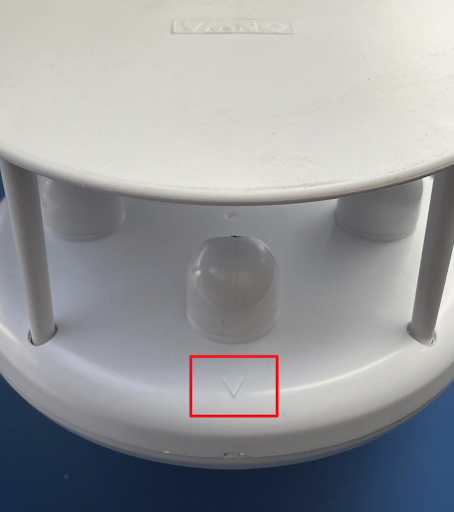
- The NOAA CrowdMag app (Google Play / App Store) gives location-specific declination. We recommend using the app only to obtain the declination (via the Compass or WMM tabs) and applying it with a high-precision compass.
-
Reattach the Wind Module cable to the Node-S body once both devices are securely installed.
-
Listen for these sounds in succession:
Congratulations! Your Wind Module and Node-S are online and uploading data. To see your data, check out how to access the data from your Clarity devices. The first reading typically lands in Dashboard within 2–20 minutes once the node uplinks; you'll find it on the location's card under Monitoring Locations or in Live Data.
What if it doesn't work?
- No module data after 20 minutes. Confirm you're viewing the right monitoring location on the Dashboard. See Confirming your device is uploading data.
- Wind direction looks wrong. Re-check the true-north alignment — the declination correction is the most common miss. See Finding true north to align the Wind Module.
- The battery keeps dropping. Check the Node-S solar panel isn't shaded and is angled toward the equator.
What success looks like
The module is mounted clear of obstructions, aligned to true north, and wind data appears on the Dashboard.
What's next
Still need a hand? Email us at support@clarity.io or create a support ticket, and our team will get back to you.
Was this helpful?