Deploying the Clarity Ozone Module
This guide walks you through pairing, connecting, and field-deploying the Clarity Ozone Module with a Clarity Node-S.
- You must configure your Clarity Node-S before connecting the Ozone Module. If you haven't configured the Node-S yet, follow Configure your Clarity Node-S first.
- The Ozone Module requires the Node-S to run on external power (mains, or a Clarity External Power System / EPS). Because of this, the solar panel can be removed when running the Node-S with the Ozone Module.
- The inlet and outlet must face downward, and the sun shield (pre-mounted on the module) must stay on. Removing the sun shield shortens sensor life and may void the warranty.
- Please read this entire guide — the deployment steps below are specific to running the Ozone Module with the Clarity Node-S.
In the box
| Item | Photo |
|---|---|
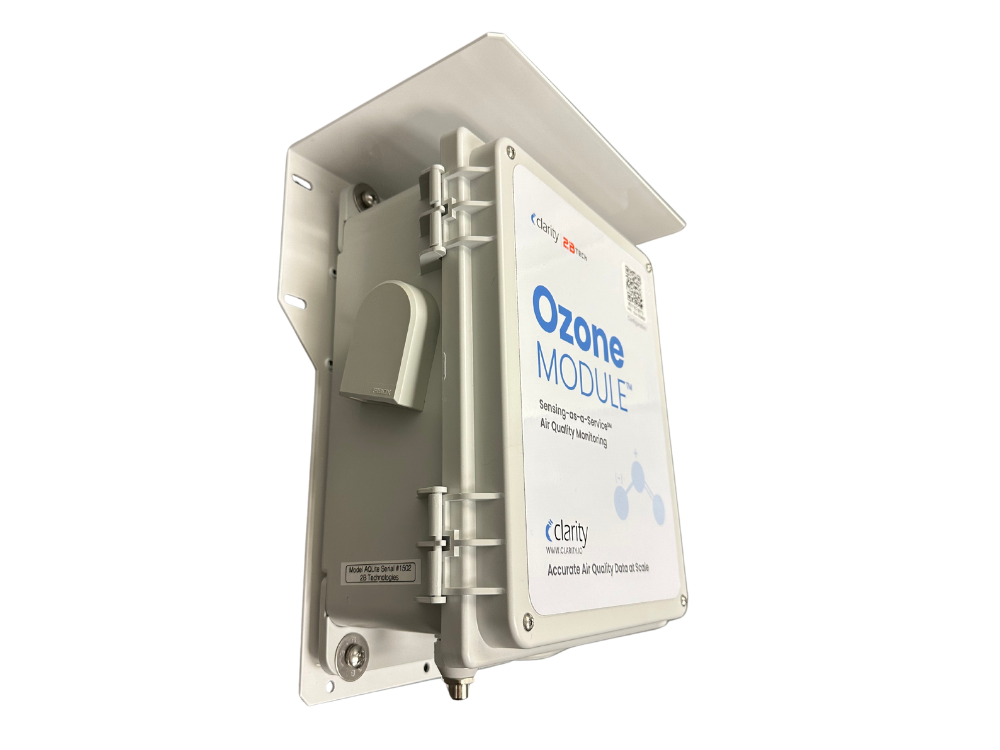
1 × Ozone Module with mounting hardware:
|  |
1 × document package:
| |
| 1 × zero scrubber | 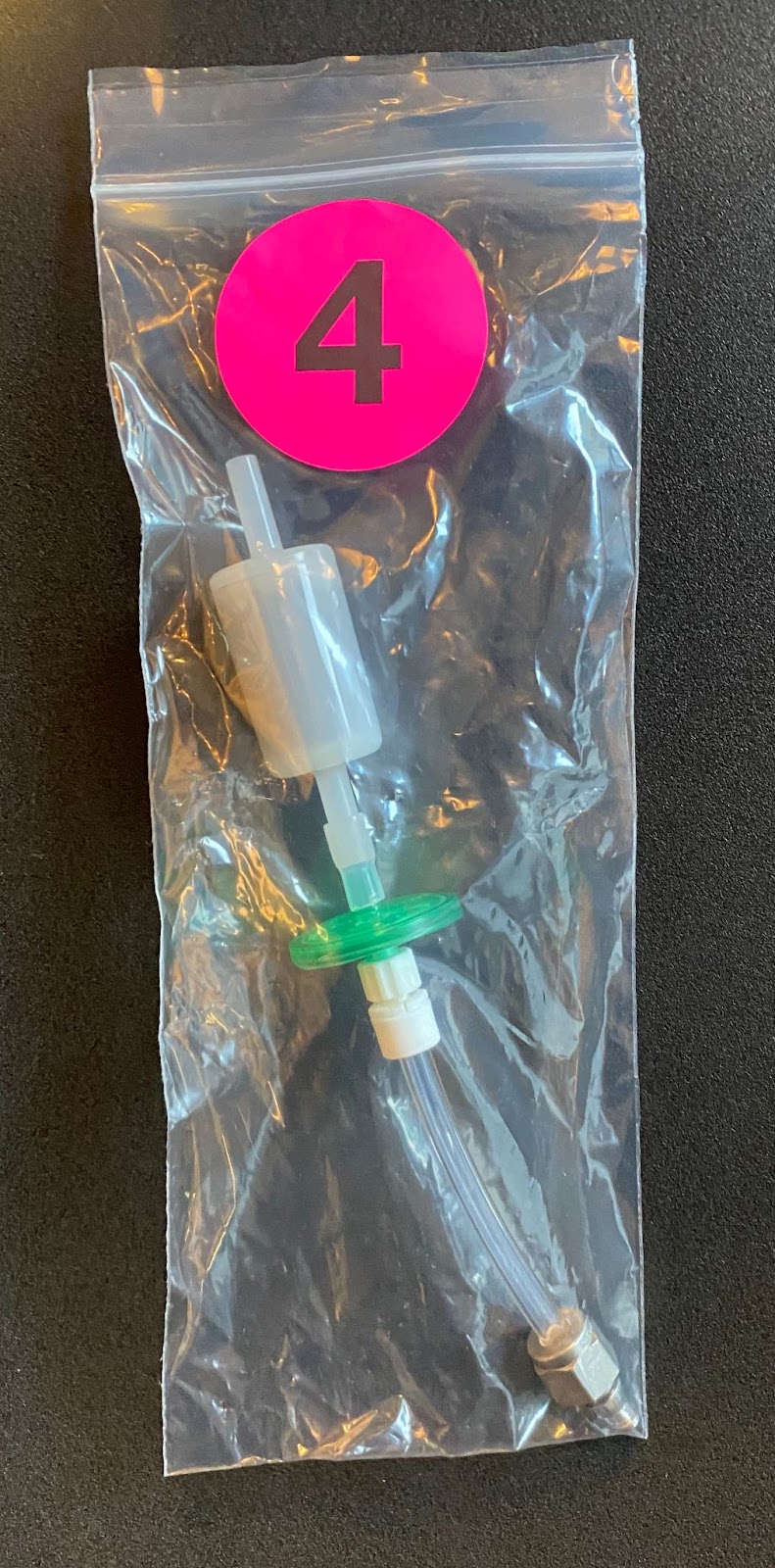 |
| 10 × 47 mm Teflon™ filters (5–6 micron pore size) | 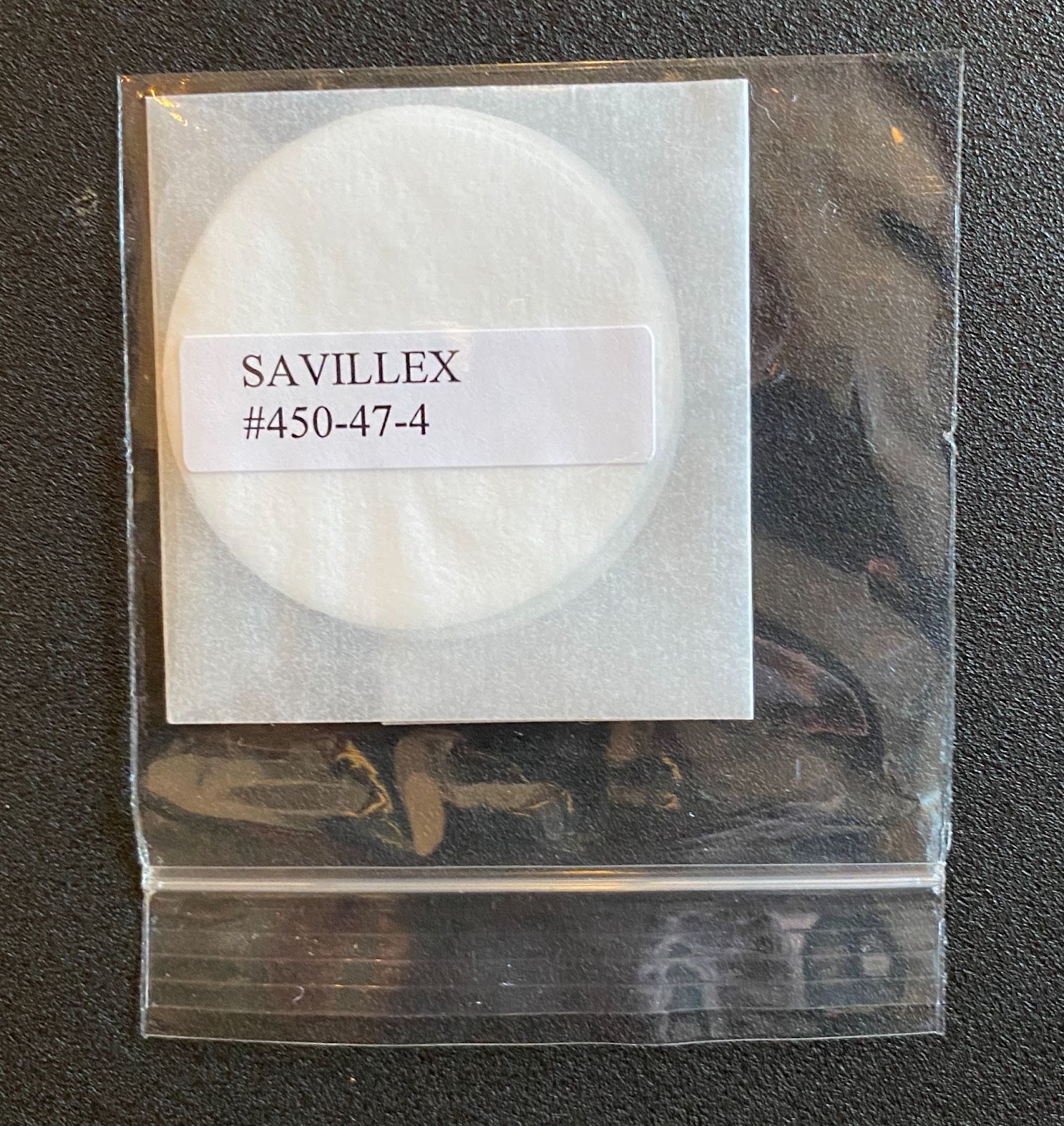 |
| 1 × accessory cable (8-conductor, M12 male-male, 6 ft) | 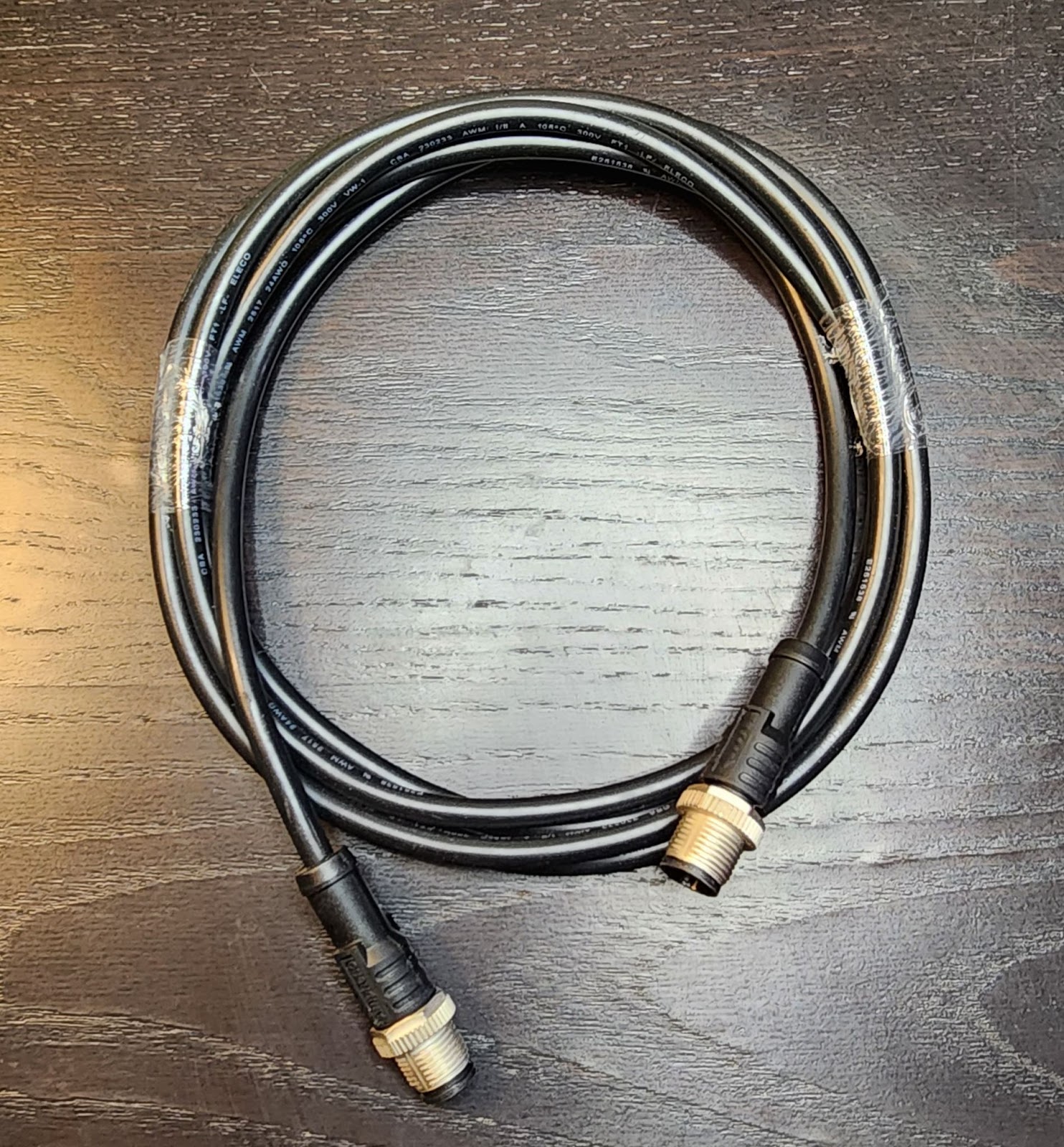 |
| Also needed but not included |
|---|
| A medium Phillips-head screwdriver |
| Stainless-steel zip ties, hose clamps, or screws appropriate for your mounting site |
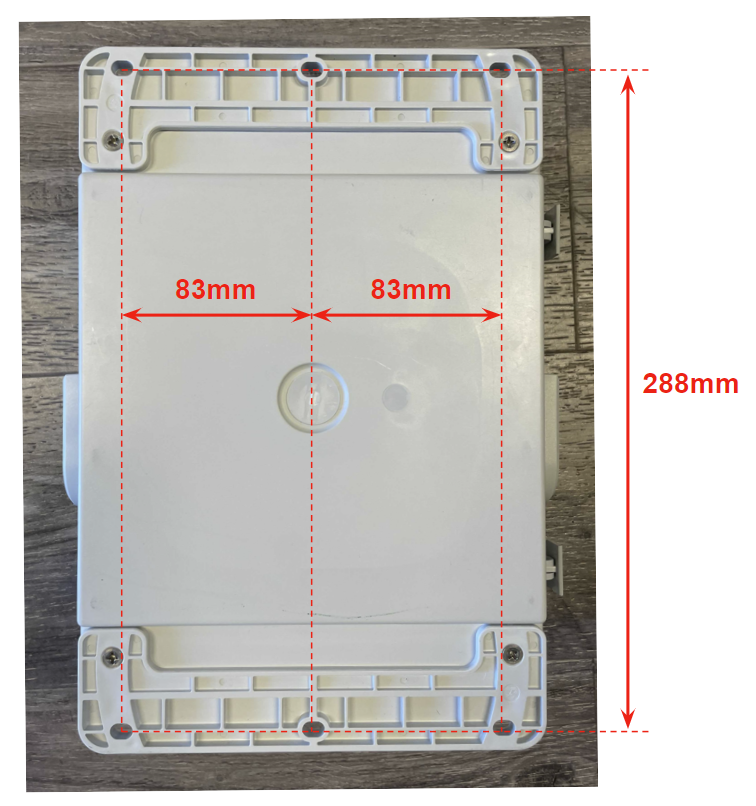
When you prep your mounting hardware, refer to the module mounting-interface dimensions in the Deploy in the field section below.
Pair the module to a compatible Node-S
To use an accessory module, it needs to be paired with a Node-S. Pairing tells the Clarity system the two are connected, configures the node to accept the module, and lets the module start sending data to the Clarity Cloud. Pairing uses the guided Pair module wizard on the Dashboard, which works the same way for every module: open the Devices page, choose the module, pick a compatible node, and pair — or scan the module's QR sticker to jump straight into the wizard with the Ozone Module pre-filled. For the full click-by-click walkthrough, follow Pair a module on Dashboard.
- Configure the Node-S first. It must be set up before you can pair a module — see the Node-S deployment guide. The wizard only offers nodes that are compatible and available, so an unconfigured node won't be selectable.
- You need an org admin or technician role. Without one, the Pair module button is disabled ("Requires org admin or technician role") — ask your org admin.
- Moving a module from another node? See How to unpair your module first.
What to confirm for the Ozone Module
When the wizard shows the deployment guide cards and the Confirm before you pair checklist, they cover requirements specific to the Ozone Module:
- External power required — Ozone needs the Node-S on external power; battery alone won't sustain it. Plug into mains, a 50 W EPS, or a 100 W EPS in low-solar sites. The solar panel can be removed. If the node you pick is still on the standard solar panel, the wizard shows a This module needs external power warning with an Update power source button so you can fix the node's power configuration without leaving the wizard.
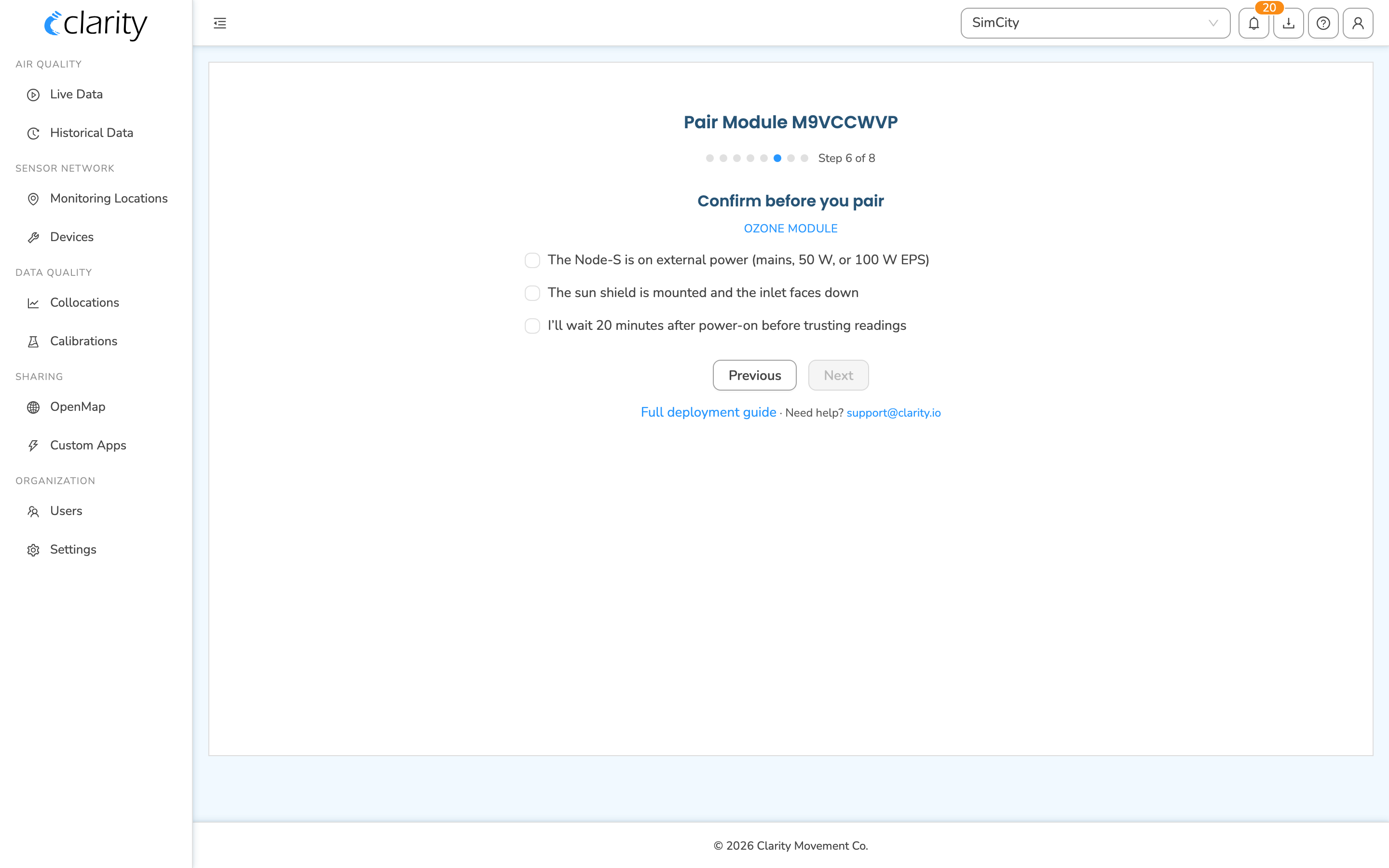
- Inlet down + sun shield mounted — the inlet and outlet must face downward, and the sun shield (pre-mounted on the module) must stay on. Removing the sun shield shortens sensor life and may void the warranty.
- Ignore the first 20 minutes — the first 20 minutes after power-on are a warm-up period; disregard those readings.
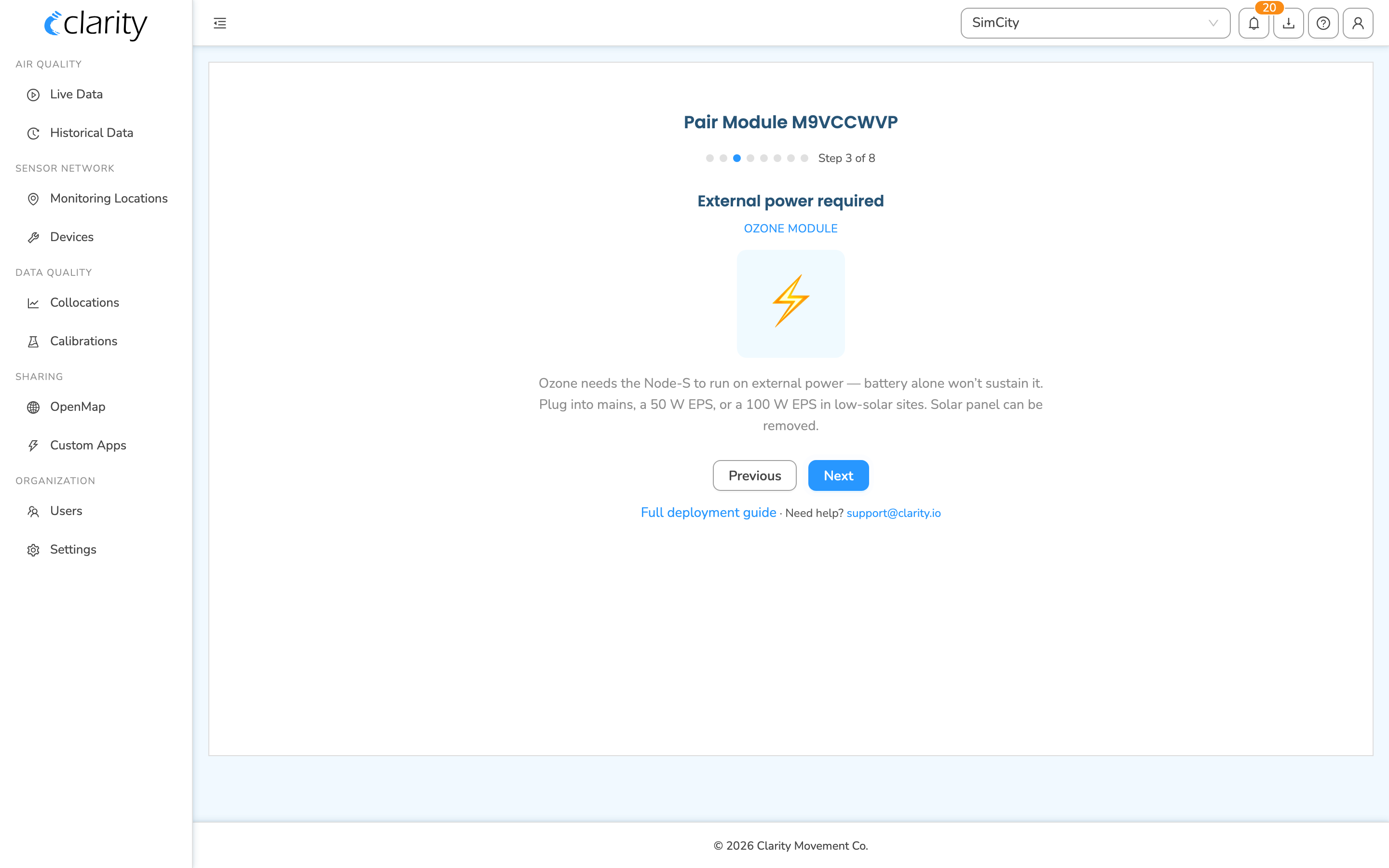
On the Confirm before you pair step, tick each item to confirm your deployment plan — that the Node-S is on external power (mains, 50 W, or 100 W EPS), the sun shield is mounted and the inlet faces down, and you'll wait 20 minutes after power-on before trusting readings. You can't advance until all boxes are checked.
What if it doesn't work?
- The module isn't in the wizard's "In inventory" group. Confirm you're in the right organization and have the Technician or Org Admin role. If it shows under Already paired, unpair it first.
- The node I want is greyed out. It's either incompatible or already has a module of the same family — check Node and module compatibility.
- Still stuck? Email support@clarity.io with the node and module IDs.
What success looks like
The wizard showed the Module paired confirmation, and the Ozone Module appears paired with your Node-S on the Devices page.
Connect the module to the Clarity Node-S
Run a connection test before deploying in the field, to confirm data is uploading to the Clarity Dashboard.
The Ozone Module requires the Node-S on external power, so the Node solar panel isn't needed.
-
Assemble and configure the Node-S that will host the Ozone Module first. See the Clarity Node-S deployment guide.
-
Power on the Node-S. Plug the external power adapter into the Node-S body, then plug the adapter into your external power source. The Node-S plays the Power On sound (a single beep).
-
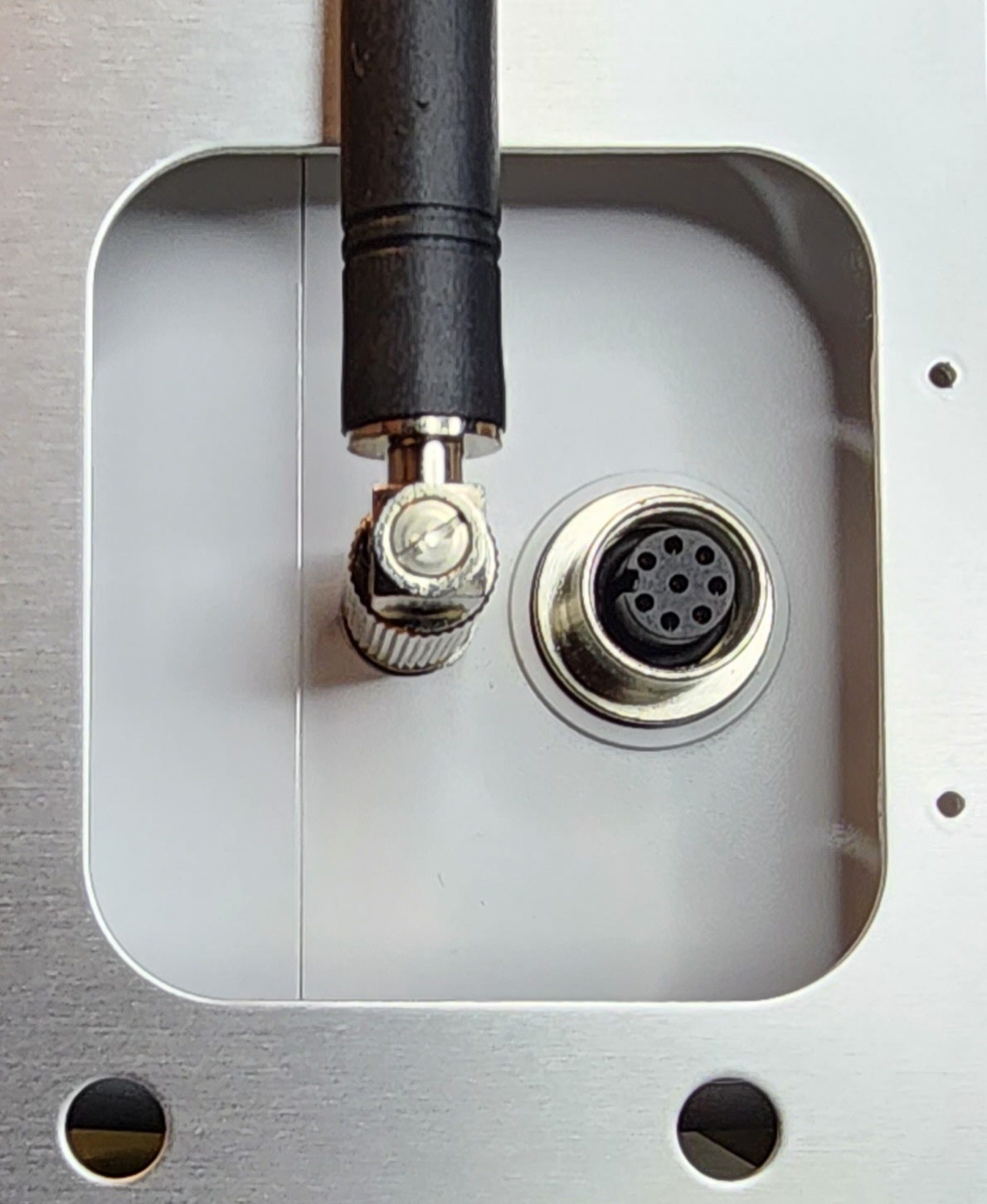
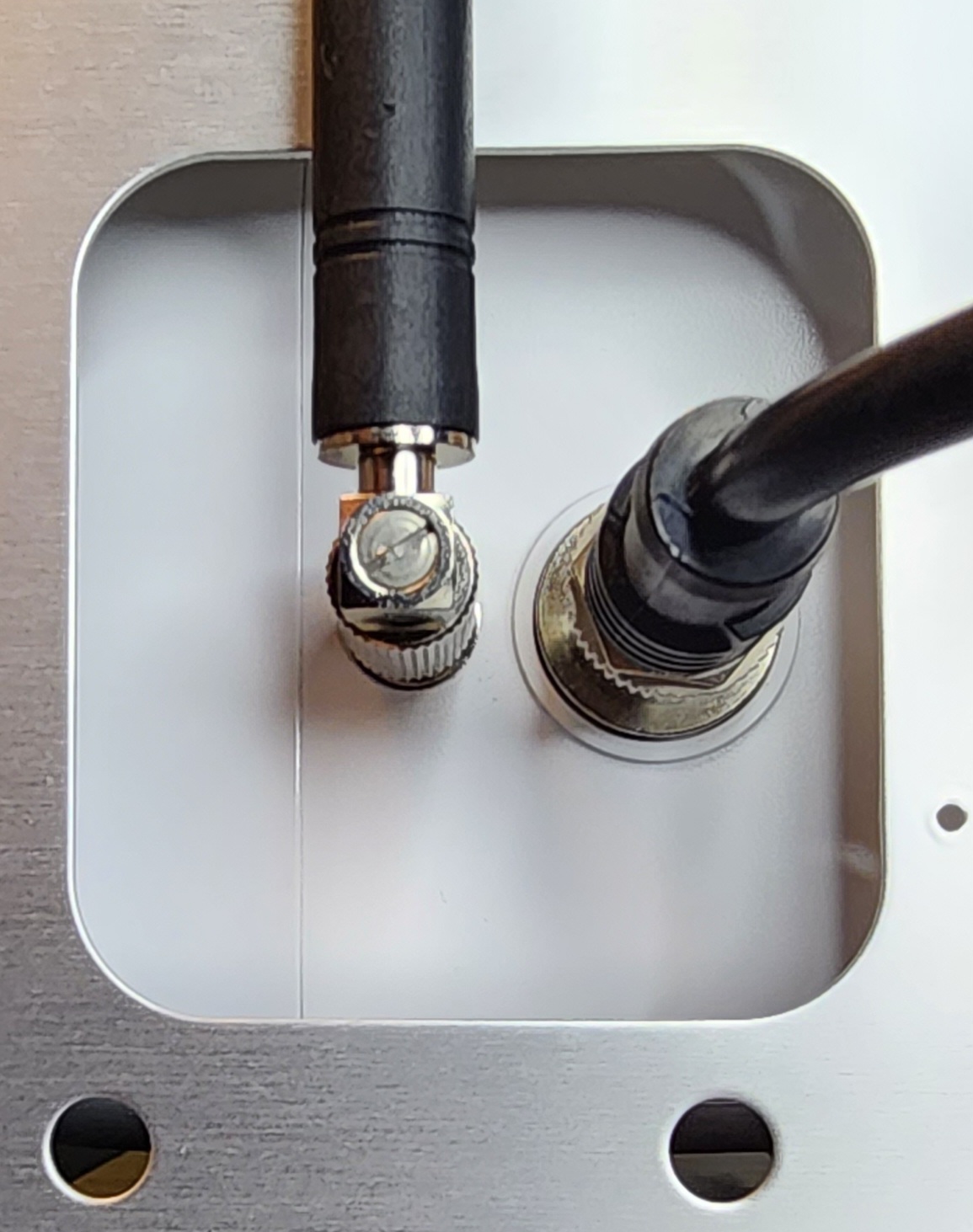
Connect the module. Plug the accessory cable into the Clarity accessory port. Twist the cable connector bushing clockwise into the threaded node connector several turns until finger-tight — do not use a wrench. While you're there, make sure the adjacent antenna connector is also finger-tight and the antenna points vertically.
-
Once the module cable is connected, the Node-S plays the Power On sound again and restarts its connection to the Clarity Cloud. You'll hear the Ozone Module pump turn on and start running.
-
Wait for cellular connection. This can take 2–10 minutes depending on signal strength.
- If the Node-S Connection Failure sound plays, confirm the device was configured on the Dashboard first.
- If no sound plays, the node can't reach the cellular network — make sure you're in an area with coverage.
- If the Connection Successful sound plays, continue.
-
The node then connects to the module.
- A successful module connection plays the Module Connection Successful sound.
- A failed connection plays the Module Connection Failed sound — if you hear it, check the cable connection between the Node-S and the module.
- The Module Configuration Error sound means the Node-S isn't configured to accept modules — re-check the pairing steps above.
-
Confirm data is uploading. After the module connects, check that both the Node-S and the Ozone Module are sending data. In the Dashboard, open Monitoring Locations, select the node's location, and check the Devices section for a recent Last reading (a freshly paired node shows a Waiting for first reading pill until its first reading arrives). See also Confirm device data are uploading after deployment.
During the first 20 minutes after starting the Ozone Module, it's warming up — disregard data from that window.
What if it doesn't work?
- I hear the Connection Failure sound (beep beep beep). Confirm the module was paired on Dashboard first, then re-seat the cable firmly.
- The module shows an alarm on the Dashboard. See Troubleshooting accessory module alarms.
- Weak or no signal at the site. See Troubleshooting a weak signal alarm.
What success looks like
You heard the connection sounds, the pump is running, and the Ozone Module's location shows a recent Last reading in the Dashboard (after the 20-minute warm-up).
Deploy the Node-S + Ozone Module in the field
Review the Ozone Module siting tips before you choose a location.
-
After selecting your site, mount the Node-S to the pole, wall, or panel. See Deploying the Clarity Node-S.
- To make installation easier, you can temporarily detach the Ozone Module cable from the node's accessory port.
- Use stainless-steel zip ties, hose clamps, or screws (not provided).
- Ensure the inlet and outlet face downward and are unobstructed.
- Make sure the cable can reach the Ozone Module once it's mounted.
-
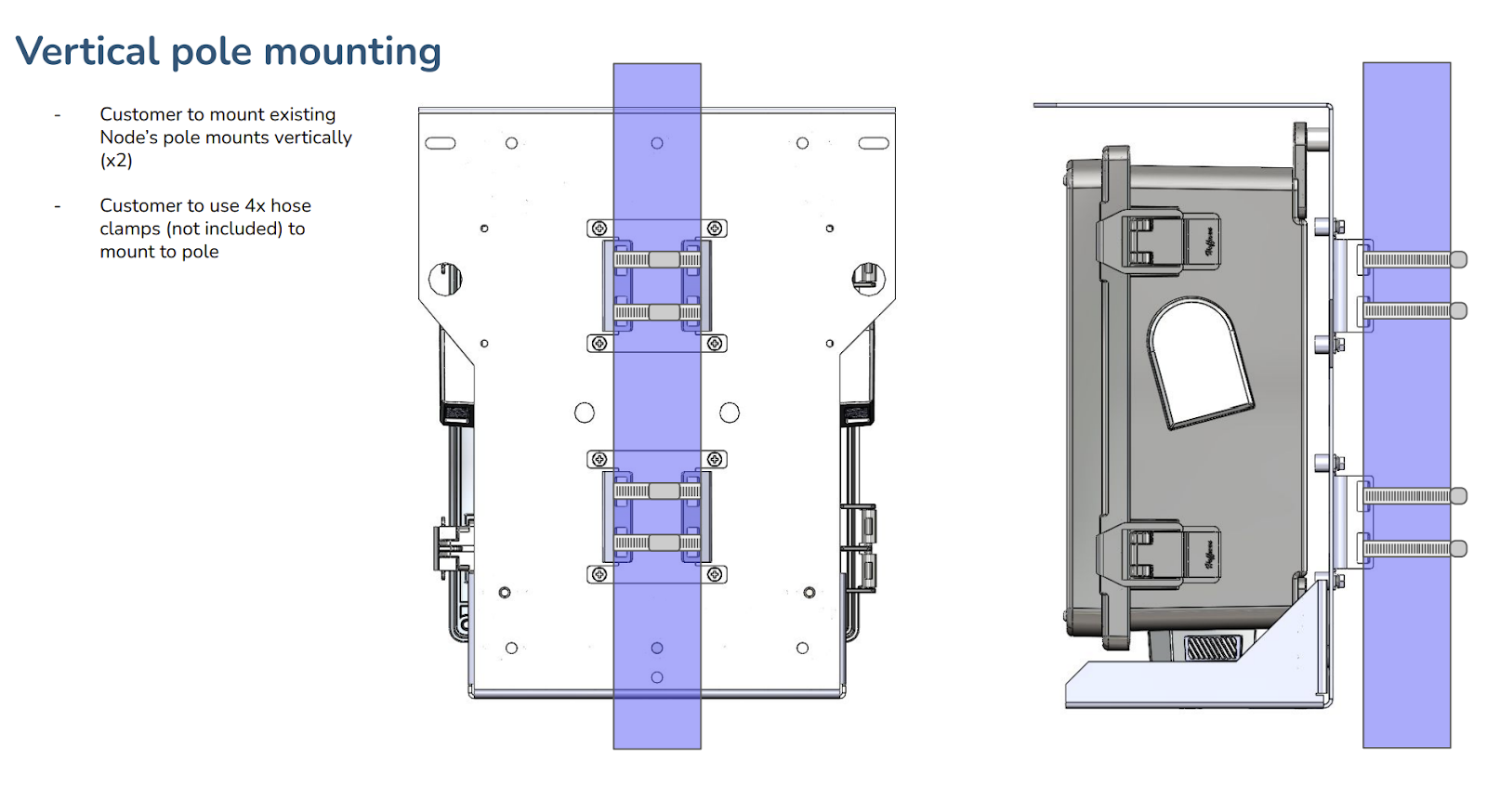
Mount the Ozone Module to the pole or panel. Refer to the dimensions and mounting diagram below to pick the right hardware for your site. Mount the brackets vertically and use 4 × hose clamps (not included) to secure the module to the pole.
-
Reattach the Ozone Module cable to the Node-S body after both are securely installed.
-
Listen for these sounds in sequence after reattaching the cable:
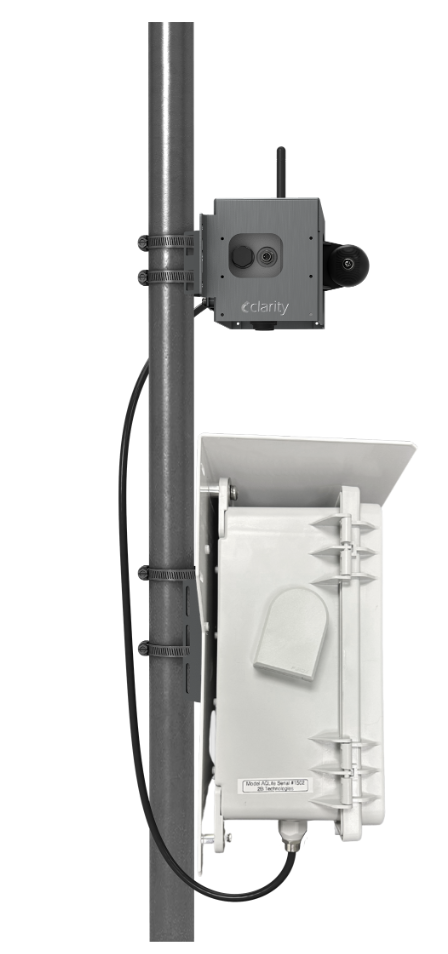
Congratulations! Your Ozone Module and Node-S are online and uploading data. To see your data, check out how to access the data from your Clarity devices. You can also open the node's location in Monitoring Locations, or use Open in Live Data / Load historical data from the node's row on the Devices page.
What if it doesn't work?
- No module data after 20 minutes past warm-up. Confirm you're viewing the right monitoring location on the Dashboard. See Confirming your device is uploading data.
- The inlet and outlet can't face down at this spot. Choose a different mount — any other orientation can let moisture in, and the sun shield must stay on.
- The node keeps losing power. The Ozone Module needs external power — confirm the mains connection or EPS is hooked up and sized for the site (a 100 W EPS may be needed in low-solar locations).
What success looks like
The module is mounted securely with the inlet and outlet facing down, the sun shield is on, and ozone data appears on the Dashboard.
After deployment, see Maintaining and recalibrating your Clarity Ozone Module.
What's next
Still need a hand? Email us at support@clarity.io or create a support ticket, and our team will get back to you.
Was this helpful?