Clarity Node-S and Add-on Modules overview
The Clarity Node-S is the core building block of Clarity's Sensing-as-a-Service platform, and add-on modules extend what a single monitoring location can measure.
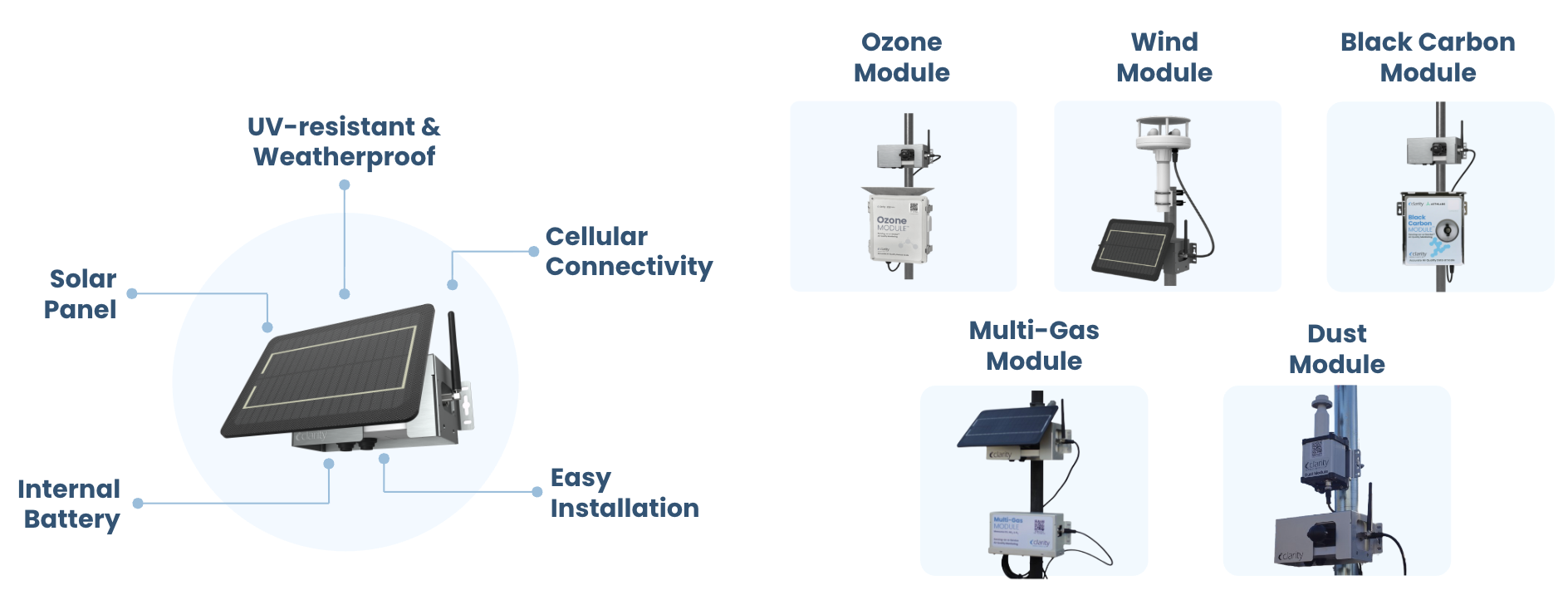
Clarity Node-S
As the key building block of Sensing-as-a-Service, the Clarity Node-S is an advanced IoT device designed for comprehensive air quality monitoring, featuring:
- Versatile sensing: Equipped with on-board sensors for particulate matter (laser light scattering), nitrogen dioxide (electrochemical cell sensor with selective filter), temperature, and humidity, the Node-S can also be expanded with add-on modules to extend its measurement range.
- Measurement accuracy: Certified by MCERTS for high accuracy, validated through multiple third-party tests and collocation studies across diverse environments.
- Self-sustaining power: With an integrated solar power harvesting and storage system, it operates autonomously, eliminating the need for outdoor power outlets. Its battery supports operation for 30 days without any sunlight.
- Seamless connectivity: Out-of-the-box cellular connectivity enables continuous data transmission to the Clarity Cloud, supporting reliable real-time monitoring.
- Fast deployment: Designed for straightforward field deployment and includes mounting brackets for flexible installation options.
- Rugged durability: Built to endure diverse environmental conditions, the Node-S has an average operational lifetime of 3.5 years. It's UV-resistant, weatherproof, and boasts an IPX3 ingress protection rating. It is FCC and CE certified.
- Remote status monitoring: The Clarity Dashboard lets you remotely monitor device status and troubleshoot hardware issues, improving maintenance efficiency.
- Customizable configuration: You can configure the device through the Clarity Dashboard, assigning it to a monitoring location and streaming its measurements.
This robust, flexible device powers accurate and scalable air quality monitoring.
Configuring a Node-S is a self-service wizard. Go to Sensor network → Devices and use the top-right Configure node button. Once configured, the Dashboard labels the place where a Node-S streams its measurements a Monitoring Location. Look for the Monitoring Location to see the Node-S measurments. The data-model and API term for this is "datasource".
Add-on modules
Clarity offers several add-on modules that can be paired with Node-S air quality monitoring devices. These modules expand the capabilities of the base system by adding new measurement capabilities. The add-on modules available are:
- Wind Module: An anemometer that collects data on wind speed, wind direction, ambient temperature, humidity, and barometric pressure. It enhances the environmental data collection capabilities of the sensor network.
- Ozone Module: Uses Federal Equivalent Method (FEM) capable technology to measure ozone concentration. It's particularly useful for customers in areas with ozone attainment issues.
- Black Carbon Module: Measures black carbon, an extremely harmful component of particulate matter. It's important for performing pollution source apportionment and assessing pollution impacts on human health and global warming.
- Multi-Gas Module: Expands the capabilities of the Node-S, enabling real-time measurement of CO, O₃, NO₂, NO, and NOx — five key pollutants that impact air quality and public health.
- Dust Module: Measures coarse particulate matter (PM₁₀) to capture airborne dust, complementing the Node-S's onboard PM₂.₅ sensing. Ideal for construction, mining, and other dust-prone environments.
These add-on modules are designed to integrate seamlessly with the Node-S platform. They are based on industry-leading technology and undergo a rigorous selection and testing process before being made available to ensure reliability and quality.
Pairing a module to a node is a self-service wizard. Go to Sensor network → Devices and use the top-right Pair module button. The module's measurements can then be accessed from the paired node's Monitoring Location.
Wind Module
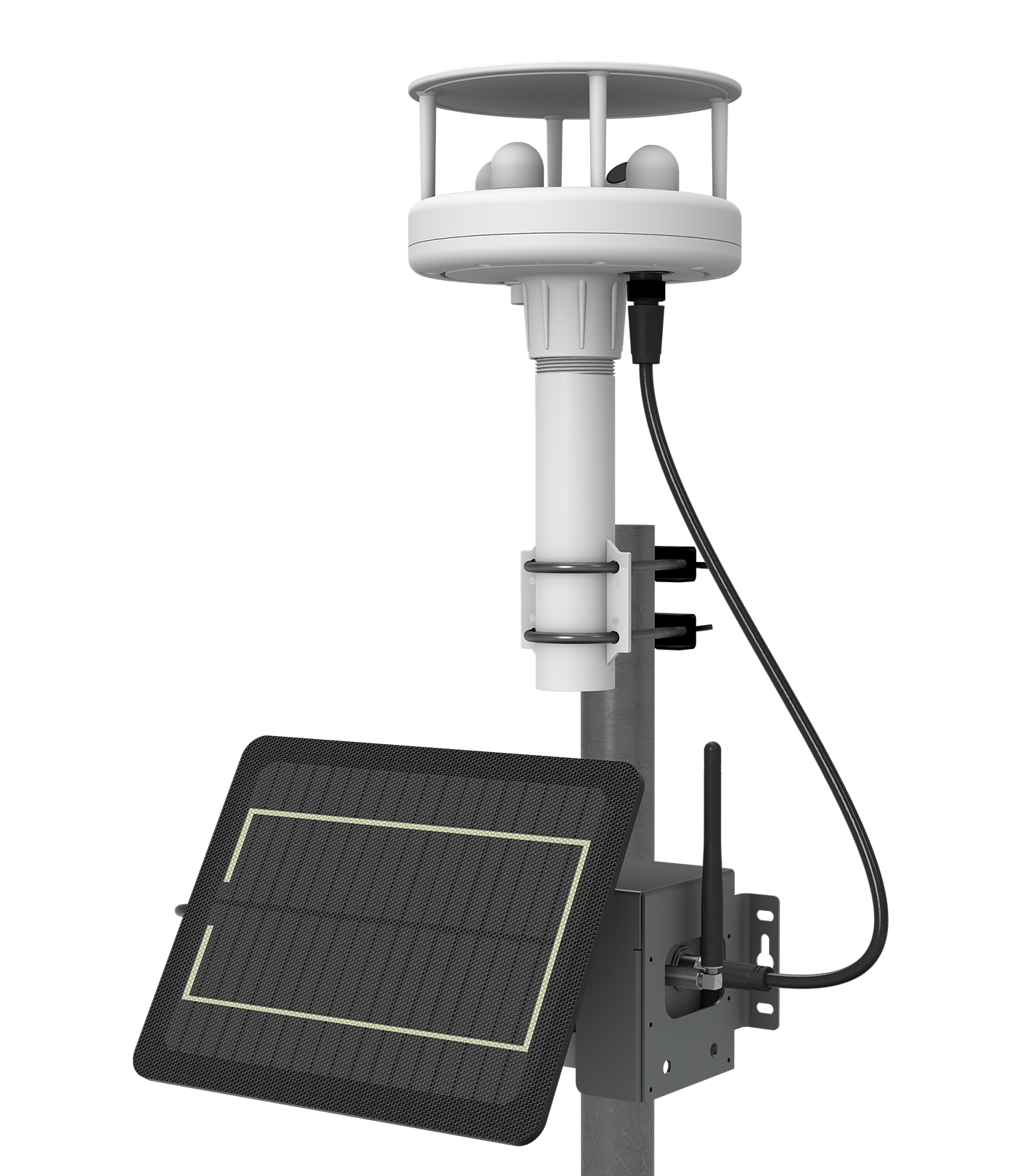
The Wind Module provides comprehensive meteorological data. It measures wind speed and direction, ambient temperature, relative humidity, and atmospheric pressure with an ultrasonic anemometer. It has a wind speed measurement range of 0 to 60 m/s (resolution 0.01 m/s) and a direction range of 0 to 360 degrees (resolution 0.1 degrees), with a typical accuracy of ± 2% for speed and ± 3° for direction in wind tunnel tests.
The information it provides offers valuable insights into the origins and movement patterns of air pollution, improving source attribution and air quality modeling.
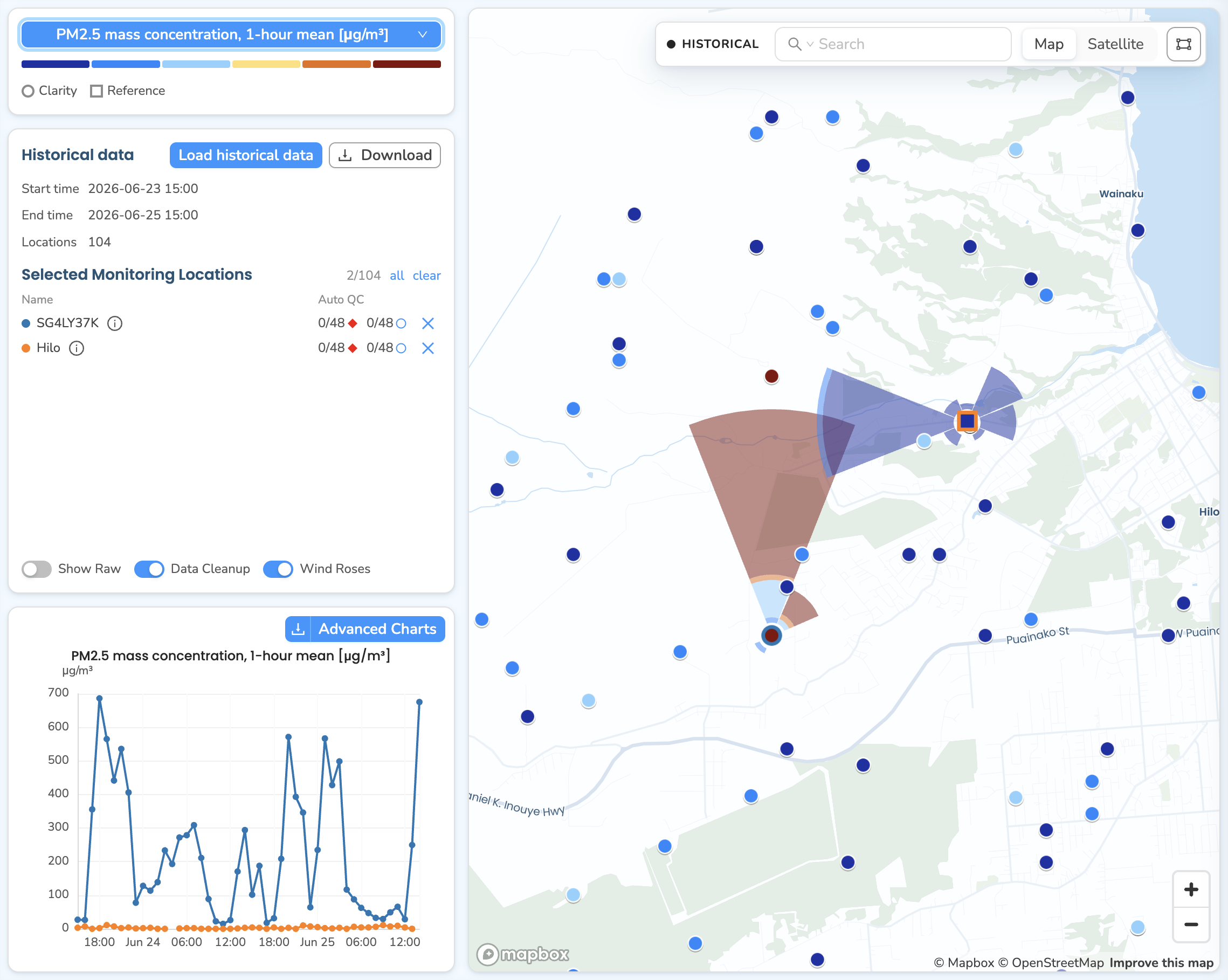
A key feature of the Wind Module is its integration with the Clarity Dashboard, where it powers wind and pollution rose visualizations to aid in analytics and source attribution.
The module is designed for easy installation and operates as a plug-and-play solution. It draws power from the native solar panel of its companion Node-S device, eliminating the need for separate power sources and simplifying deployment in various environments.
By incorporating the Wind Module into an existing Clarity Node-S network, you can significantly improve your air quality monitoring and analysis capabilities. The additional meteorological data it provides allows for more comprehensive and accurate air quality assessments, enabling better-informed decisions.
Ozone Module
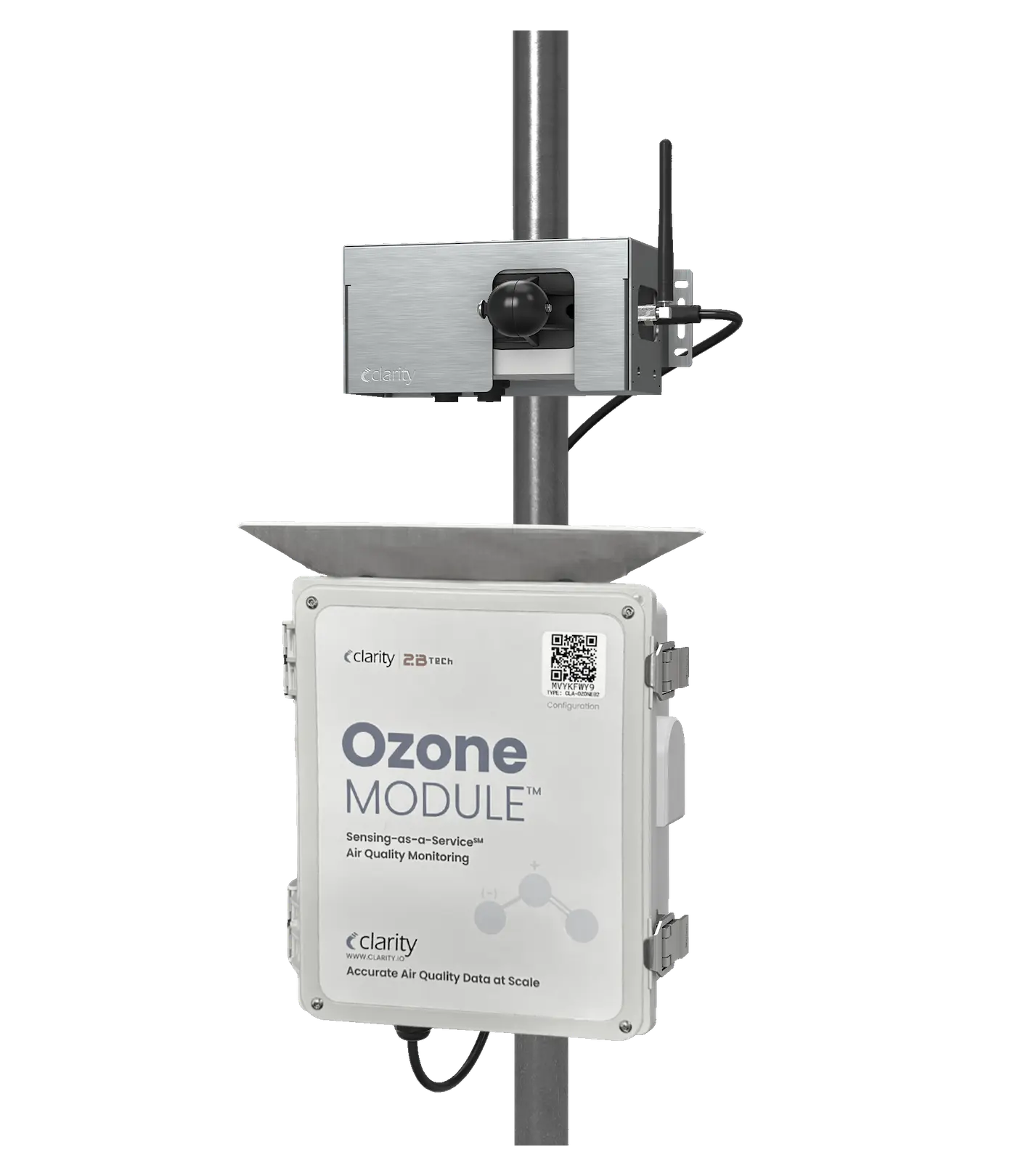
The Clarity Ozone Module is an advanced air quality monitoring device designed for accurate measurement of ambient ozone concentrations. It employs the well-established ultraviolet light absorption method at 254 nm, detecting ozone levels from a few parts-per-billion (ppb) up to 100 parts-per-million (ppm), making it versatile for a wide range of monitoring applications.
A key advantage of the Clarity Ozone Module is its use of technology recognized by the U.S. EPA as a Federal Equivalent Method (FEM): EQOA-0914-218, when operated according to standard protocols, ensuring its suitability for precise monitoring (R² > 0.9, RMSE < 4 ppb) in areas facing ozone attainment challenges. As ozone is a secondary pollutant with relatively consistent distribution over short distances, this module's high accuracy and reliable data output make it preferable over lower-cost, lower-accuracy solutions.
Developed in collaboration with 2B Technologies, a leader in ozone monitoring, the Clarity Ozone Module integrates seamlessly into Clarity's sensor networks, enhancing their capability to track this critical pollutant. Due to its higher power requirements, it cannot be powered by the Node-S onboard solar panel and battery. Instead, it can be operated by connecting the Node-S to its power adapter or by using the Clarity External Power System.
Black Carbon Module
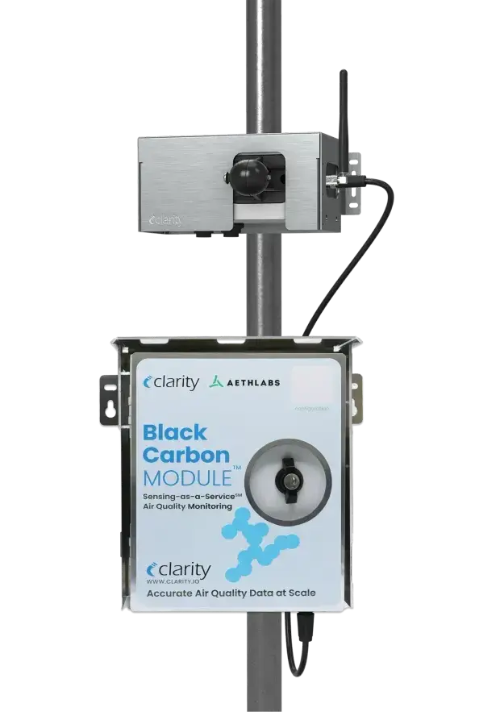
The Clarity Black Carbon Module, developed in partnership with AethLabs, is an advanced air quality monitoring device focused on measuring black carbon — a particularly harmful component of particulate matter with serious implications for human health, agricultural productivity, and climate change.
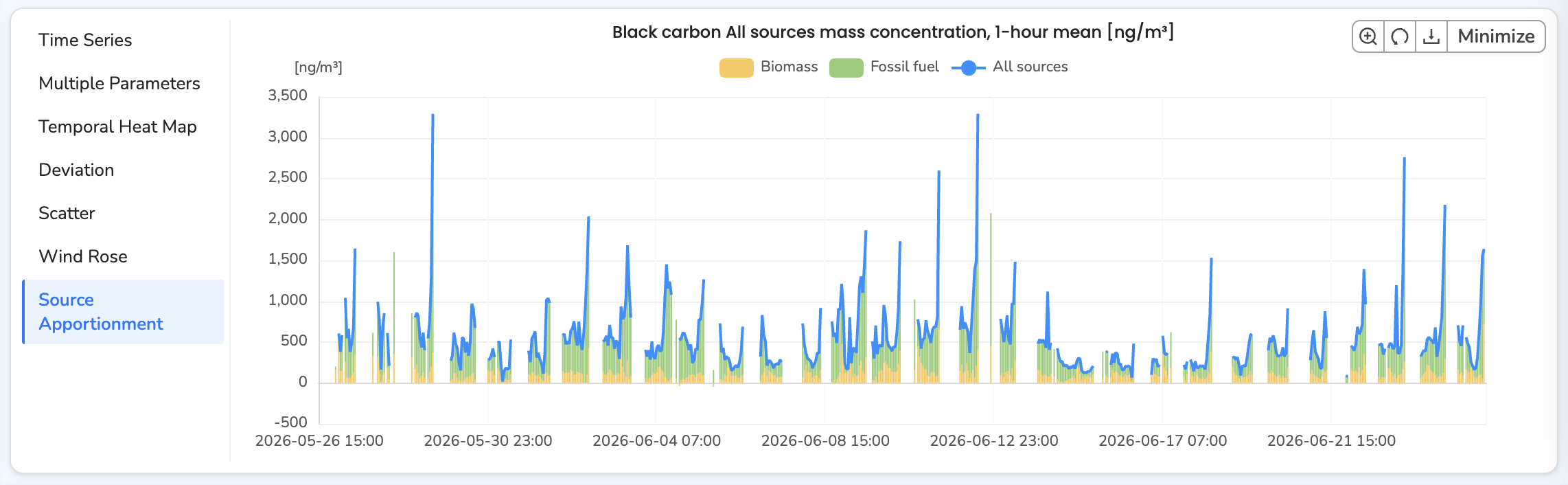
Technically, the Black Carbon Module is a real-time, 5-wavelength (880 nm, 625 nm, 528 nm, 470 nm, and 375 nm) UV-IR aethalometer. It offers a measurement range of 0–1 mg/m³ with a resolution of 1 ng/m³ and a high accuracy comparable to the well-regarded Magee Scientific AE33 (R² > 0.9, RMSE < 200 ng/m³). By measuring at multiple wavelengths, it can determine total black carbon concentration and differentiate black carbon from biomass versus fossil-fuel burning sources. This source apportionment feature lets you identify the specific sources of black carbon and particulate matter at a given location, such as distinguishing between traffic emissions and forest fires. These insights are accessible through the Clarity Dashboard on the Historical Data page.
Designed for outdoor environments, the module can be installed on street poles or fence lines, making it ideal for long-term monitoring campaigns. Its Filter Tape Cartridge system ensures minimal maintenance and supports extended multi-month deployments with infrequent site visits.
The Black Carbon Module works in tandem with the Clarity Node-S device. Due to its higher power requirements, it cannot be powered by the Node-S onboard solar panel and battery. Instead, it can be operated by connecting the Node-S to its power adapter or by using the Clarity External Power System. A Wind Module can also be added to enhance source-apportionment capabilities.
Integrating the Clarity Black Carbon Module into a Clarity sensor network supports continuous monitoring and source analysis of black carbon and particulate matter, enabling organizations to answer advanced environmental questions.
Multi-Gas Module
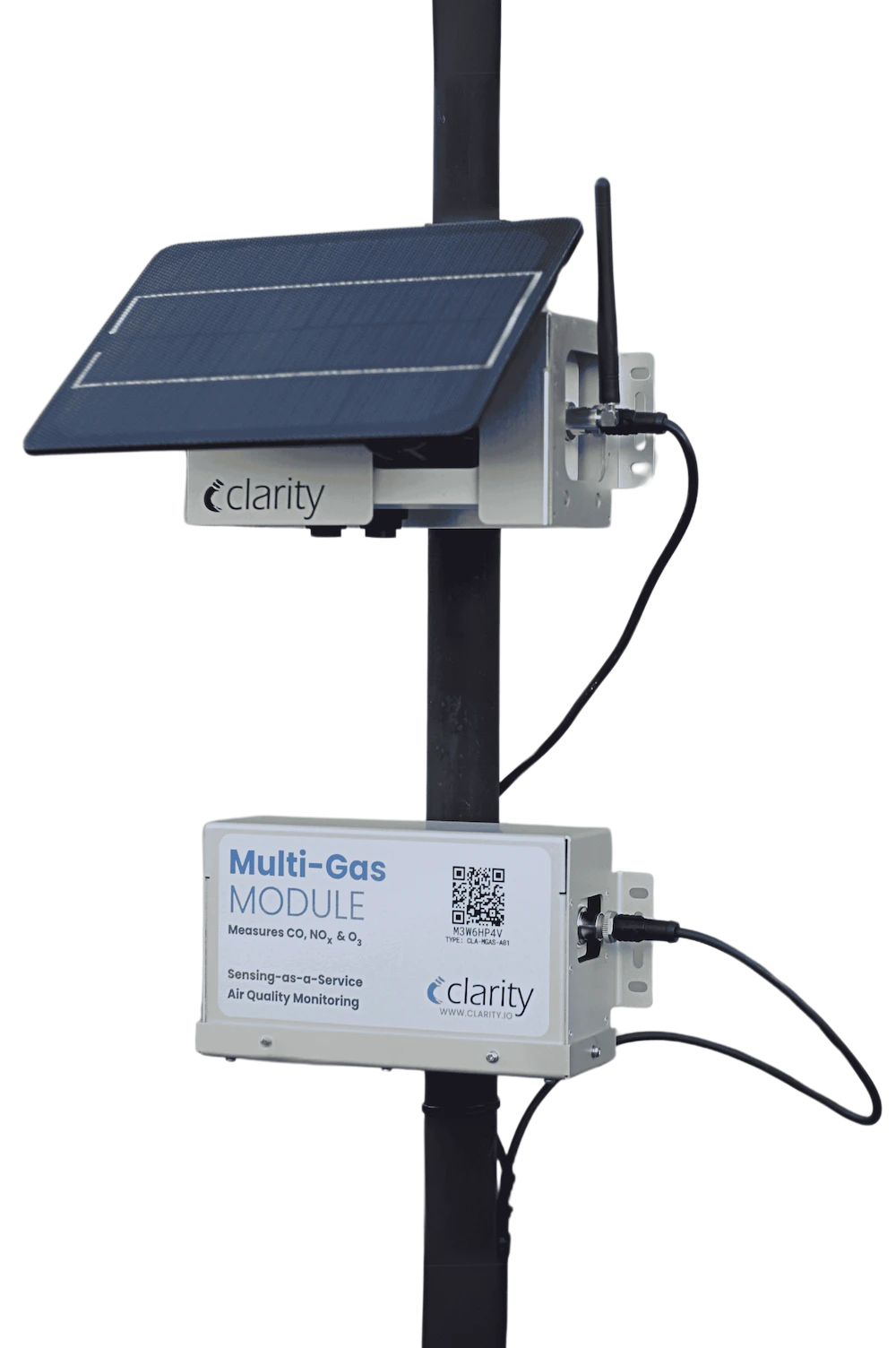
The Clarity Multi-Gas Module is designed to detect a configurable set of gases depending on your project needs. Common options include nitrogen dioxide (NO₂), carbon monoxide (CO), and ozone (O₃). This allows for targeted monitoring of pollutants from traffic, industry, and combustion sources.
Designed for effortless deployment, the Multi-Gas Module features a weatherproof, UV-resistant enclosure and modular mounting for quick installation on both vertical and horizontal poles. With Clarity's plug-and-play add-on module design, the Multi-Gas Module leverages the solar-powered operation and built-in cellular connectivity of the Node-S, even when paired with the Wind Module.
The Multi-Gas Module enhances Clarity deployments by adding gaseous pollutant data to existing PM or black carbon measurements. When paired with the Node-S, it helps build a fuller picture of air quality by capturing both particle- and gas-phase pollutants, enabling better source attribution and response planning.
Dust Module
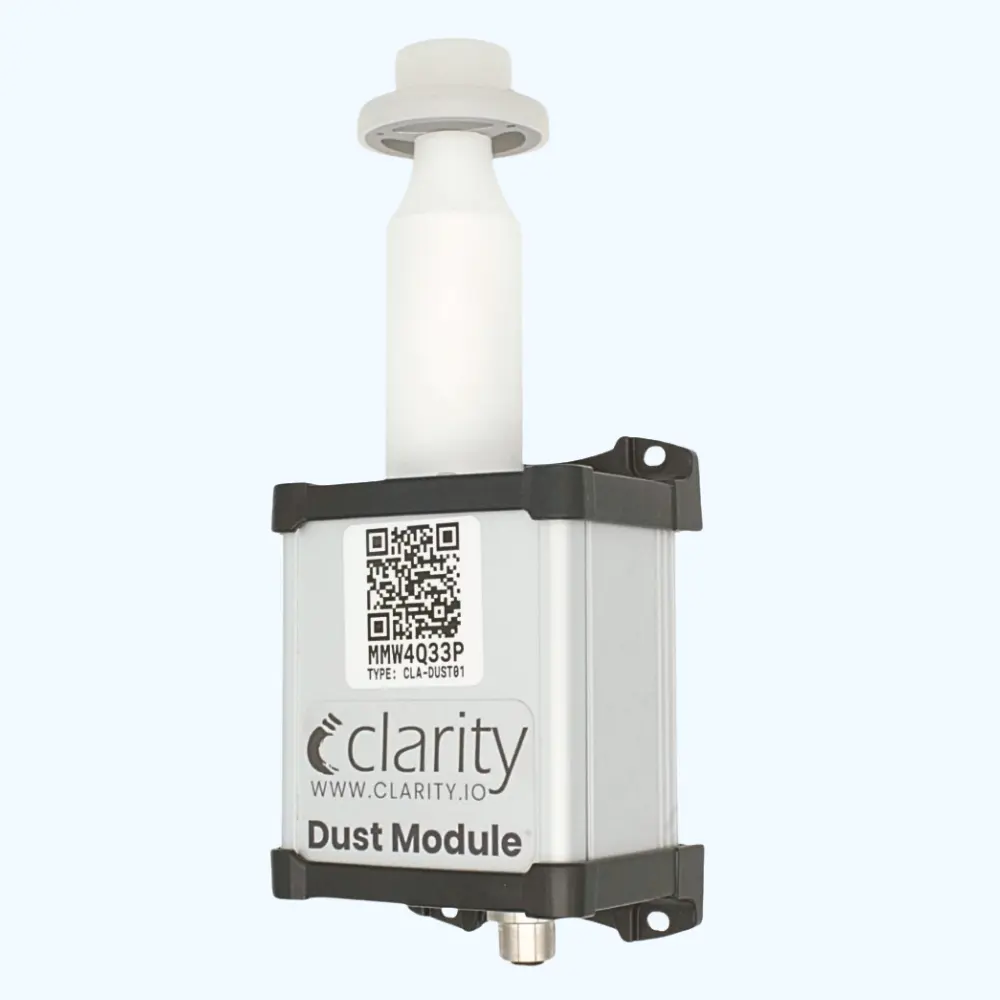
The Dust Module extends the Node-S to measure coarse particulate matter (PM₁₀) alongside the Node-S's onboard PM₂.₅, giving a fuller picture of airborne dust. It's well suited to monitoring around construction sites, quarries, mining operations, and other industrial or fugitive-dust sources.
The module draws in ambient air through a tall inlet tube that must point straight up toward the sky to stay weatherproof. Because of its higher power requirements, the Dust Module requires the Node-S to run on external power — mains power or a Clarity External Power System — and the onboard solar panel can be removed.
Like Clarity's other add-on modules, the Dust Module is a plug-and-play solution with a weatherproof, UV-resistant enclosure and modular pole mounting for quick installation. Its measurements are accessed from the paired Node-S's Monitoring Location in the Clarity Dashboard, just like any other module.
What's next
Still need a hand? Email us at support@clarity.io or create a support ticket, and our team will get back to you.
Was this helpful?